Pomona Could Accept $2.7 Million for Supportive Housing. The Report Leaves Out How Many People It Will Serve.

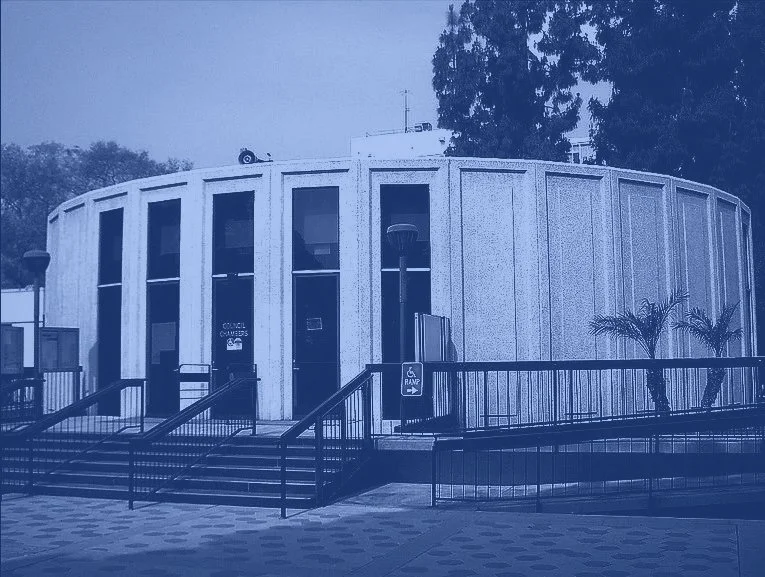
Pomona could accept nearly $2.7 million in federal funding for permanent supportive housing next week. The money will help pay rent for people who are unhoused with disabilities.

What the city’s report does not say is how many people will receive that help.

The City Council will consider the $2,684,269 grant during its meeting on Monday, October 5. The item is on the consent calendar, so it could be approved without a separate public discussion unless a councilmember pulls it.

The grant comes from the U.S. Department of Housing and Urban Development’s Continuum of Care program. It would fund Pomona’s Permanent Supportive Housing program from January 1 through December 31, 2027.

This is a renewal of an existing rental assistance program. It is not money for constructing housing.

The federal agreement assigns $2,569,428 to rental assistance and $114,841 to administration. It assigns nothing to acquiring property, rehabilitating apartments, new construction or operating costs.

Rental assistance is still housing assistance. It can keep someone housed even when a disability or limited income makes market rent impossible to afford. But the distinction matters in a city where housing remains scarce and expensive. This grant helps pay for housing that already exists. It does not add housing to the market.

Pomona must also provide a $671,068 match using eligible local or state resources. The staff report does not identify the sources of that match or say how much will be cash and how much, if any, will be provided through staff time or other in-kind contributions.

There are other questions in the paperwork.

The staff report says $42,000 will be awarded to Volunteers of America Los Angeles for a life-skills program. The HUD agreement, however, lists the entire $2,569,428 program allocation as rental assistance and shows zero dollars for supportive services.

That does not necessarily mean the $42,000 is being spent improperly. It means the two documents do not explain how the life-skills payment fits within the approved federal budget.

The city says the budget amendment will increase revenue estimates and spending authority by $2,223,835, rather than the full $2,684,269 award. But the table in the same report lists adjustments that net to a $1,552,767 decrease in revenue and a $1,552,767 increase in appropriations. The report does not reconcile those figures.

Pomona uses four organizations to identify and refer people to the program: Volunteers of America Los Angeles, Foothill AIDS Project, Tri-City Mental Health Authority and Prototypes.

Eligible participants include people experiencing homelessness with permanent disabilities and families in which an adult or child has a permanent disability. The referring organizations work with people living with HIV, people experiencing mental-health conditions and women and families affected by substance use, mental illness or domestic violence. The report describes who may qualify. It does not describe the program’s current reach.

The report does not provide a current number of participating households, adults, children or total people housed. It does not say how many people entered housing during the present grant year, how many remained housed or whether any rental assistance went unused.

A 2023 HUD housing inventory listed Pomona’s program at 139 beds: 59 family beds and 80 adult-only beds. The report going before the council does not provide an updated figure.

The 2027 award is also $9,180 lower than the $2,693,449 Pomona received for the same program in 2026. The difference is small, but the city does not say whether it will affect the number of people served.

The council is not being asked to create a new housing program. It is being asked to renew one that already exists and authorize the city manager to execute the agreements and any later amendments needed to operate it.

The council is not being asked to create a new housing program. It is being asked to renew one that already exists and authorize the city manager to execute the agreements and any later amendments needed to operate it.


The Pomonan is an independent publication of essays, criticism, photography, and cultural commentary.
Pomona Planning Commission to consider Dutch Bros drive-through on North Garey Avenue

Illustration Julian Lucas ©2026

Pomona Is About to Trade a 4,700-Square-Foot Building for a Drive-Through Coffee Shop

Pomona’s Planning Commission will consider a Dutch Bros Coffee proposal tonight at 3272 N. Garey Ave.

The plan is simple enough. Demolish an existing 4,700-square-foot building. Put up a new 1,025-square-foot drive-through coffee shop. Add the lanes, parking and site improvements that come with it.

Before punk ass Starbucks put a drive through on every corner, Portland had Motor Moka. In 1990, Coffee People founders Jim and Patty Roberts opened what is generally recognized as the country’s first drive through coffee shop near the Oregon Convention Center. The idea was simple: espresso without getting out of the car.

So yea, Portland got there first. Then California did what California does and turned a roadside coffee idea into a national drive through economy.

Owners Dane and Travis Boersma Grants Pass ©1992

Dutch Bros came two years later, starting as a coffee pushcart in Grants Pass, Oregon. Basically a street vendor. Oh, the irony. Now it is a national chain asking Pomona for a drive through. It made sense up there. Now it has more than 1,200 locations across the country, and one may be coming to North Garey.

The project needs a conditional use permit, development plan review and a variance from the Pomona Corridors Specific Plan. City staff is recommending approval.

This is not really about whether people like Dutch Bros. People do. It is coffee, sugar, caffeine, those granola bars OMG and a line of cars that somehow materializes at all hours of the day.

The better question is what Pomona wants Garey Avenue to become.

A major commercial corridor is being asked to give up a larger existing building for something less than a quarter of its size, built around the drive-through. That may be a normal transaction in Southern California. It is also a strange vision of development for a city that constantly talks about revitalization, walkability, local business and bringing more life to its corridors.

We keep getting the same answer: cars pull in, cars line up, cars pull out.

Again, Dutch Bros is not the villain here. It is a company doing what companies do. The Planning Commission is the public body deciding whether this is the kind of land use Pomona should keep making room for.

The commission meets at 7 p.m. tonight at City Hall, 505 S. Garey Ave. The public can comment before the vote.

Maybe it passes without much discussion. It probably will. But these are the small decisions that quietly build the city we later complain about. Maybe Pomona will eventually make room for a place to get a nice fresh salad, not iceberg lettuce from a messy salad bar or bagged lettuce that tastes like the store it came from. Something as simple as a market salad with creme fraiche, lemon, herbs, fried capers, and parmesan.

Planning Commission meeting September 23, 2026


The Pomonan is an independent publication of essays, criticism, photography, and cultural commentary.
Pomona Moves to Verify Candidate Residency Mid-Campaign

Pomona is preparing to adopt a formal residency-verification policy for candidates and elected officials, even as the 2026 campaign is already underway.

The City Council will consider Resolution 2026-95 at its meeting Monday, September 21. The item sits on the consent calendar, meaning it could be approved without separate public discussion unless a councilmember pulls it.

Pomona’s charter already requires the mayor to live in the city and councilmembers to live in the districts they represent. The proposed policy does not create that residency rule. It creates a formal process for deciding whether a candidate or elected official has produced enough documentation to prove compliance with it.

Under the proposed policy, candidates would have to show they are registered to vote at the address they claim as their residence, then provide at least two additional records from separate categories.

Those records could include a lease, property-ownership documents, vehicle registration, driver’s license, utility bill, paycheck, bank statement, insurance document, school record or court document.

The records would have to establish that the candidate lived at the address for at least 30 consecutive days immediately before receiving nomination papers. Candidates would also have to sign an affidavit under penalty of perjury.

The City Clerk would have five calendar days to review the documents. The policy says candidates who do not provide the required records before the nomination deadline “will not be permitted to file their nomination papers.”

It is a lot of paperwork for something that is supposed to be simple: Do you live where you say you live?

But elections are never simple once the filing deadlines, campaign signs, donor lists and political alliances have begun moving. A residency rule can look clear in a city charter. Proving it can be messier. A person may receive mail at one address, sleep at another, own property somewhere else and still insist they belong in a district.

The policy would give City Hall a checklist instead of leaving those disputes to rumor, neighborhood Facebook groups or last-minute political attacks.

It also raises a fair timing question. The City is moving to formalize the process after candidates have already declared campaigns, raised money and begun asking voters for support. The policy says missing documents can prevent someone from filing nomination papers, but the public agenda summary does not identify a specific candidate or elected official whose residency prompted the resolution.

That does not mean there is no legitimate reason for the policy. Election eligibility matters. So does a clear process that applies evenly, rather than one invented only when a particular candidate becomes politically inconvenient.

The council can adopt the policy in one consent-calendar vote Monday night. If nobody pulls the item for discussion, a new process governing one of the most basic requirements for public office may pass with little more than a motion and a roll call.

Official agenda and Resolution 2026-95⁠


The Pomonan is an independent publication of essays, criticism, photography, and cultural commentary.
Pomona Says Money Is Tight. The City Council Is Considering a Raise.

Pomona City Hall has spent months warning that money is tight. Pomona’s adopted General Fund budget spends approximately $11.4 million more than projected revenue, with the difference coming from reserves. Officials say services may have to be cut. Measure Y has now become the official scapegoat whenever investing in the city’s children is mentioned. And now the City Council is considering a raise.

On Monday, September 21, 2026 councilmembers will decide whether to advance a 9.91 percent increase in their monthly compensation. Regular councilmembers would go from $819 to $900 a month. The mayor would jump from $1,638 to $1,800.

Nobody is buying a yacht with that money. It is an extra $81 a month for councilmembers and $162 for the mayor. But City Hall has a funny way of discovering fiscal restraint when money is headed toward residents and discovering the Consumer Price Index when the money is headed upstairs.

The proposal also includes a one time expense payment of $600 for each councilmember and $1,200 for the mayor.

According to the City staff report, these payments would recognize expenses associated with public service and “extraordinary inflation, including recent increases in fuel costs.”

The recurring raise would cost Pomona approximately $4,544 a year. The on- time payments would add another $4,800. The total cost during the first year is $9,344.

That amount is lint in the municipal couch cushions. It will not wreck the budget, save the budget, or meaningfully alter Pomona’s financial condition. The point is not that a nine thousand dollar expense will bankrupt a city with a General Fund approaching $182 million. The point is timing.

Pomona’s adopted budget projects about $181.9 million in General Fund spending against approximately $170.5 million in revenue. The difference comes from reserves.

At the same time, the City is transferring approximately $9.2 million into the Children and Youth Fund required by Measure Y. Staff has warned that the voter approved youth measure could force reductions to “core services” unless Pomona finds additional revenue.

When the subject is youth funding, the City describes a looming fiscal burden. When the subject is council compensation, staff finds a legal formula and calculates the raise down to the dollar.

The same agenda item also updates Pomona’s salary schedule to reflect a 5 percent increase for full time and part time City classifications beginning October 1.

That raise is not a surprise and it was not negotiated last week. It comes from labor agreements and compensation plans approved in 2023 and was already built into the current operating budget.

The staff report does not disclose the total citywide cost of that 5 percent increase.

Councilmembers have not received a compensation increase since 2014. Pomona’s charter allows council pay to be adjusted using inflation, and state law would permit the City to pay councilmembers as much as $2,550 per month based on population. The proposed $900 remains far below that ceiling.

Those are fair facts. So is this one: the council considering the increase is the same council that controls the City budget and decides which expenses are necessary, which are untouchable, and which become warnings about impending cuts.

Monday’s vote would not make the council raise final. It would introduce the ordinance and approve its first reading. A second reading is scheduled for October 5.

If the ordinance survives both votes, it would take effect on November 5. The increased pay would begin on November 15.

Nine thousand dollars will not break Pomona. But austerity always sounds different depending on whose check is being discussed.

The City Council meeting begins at 7 p.m. at Pomona City Hall, 505 S. Garey Avenue.


The Pomonan is an independent publication of essays, criticism, photography, and cultural commentary.

Pomona Spent $309,642 Enforcing Sidewalk Vending Rules. It Collected $7,763 in Fines

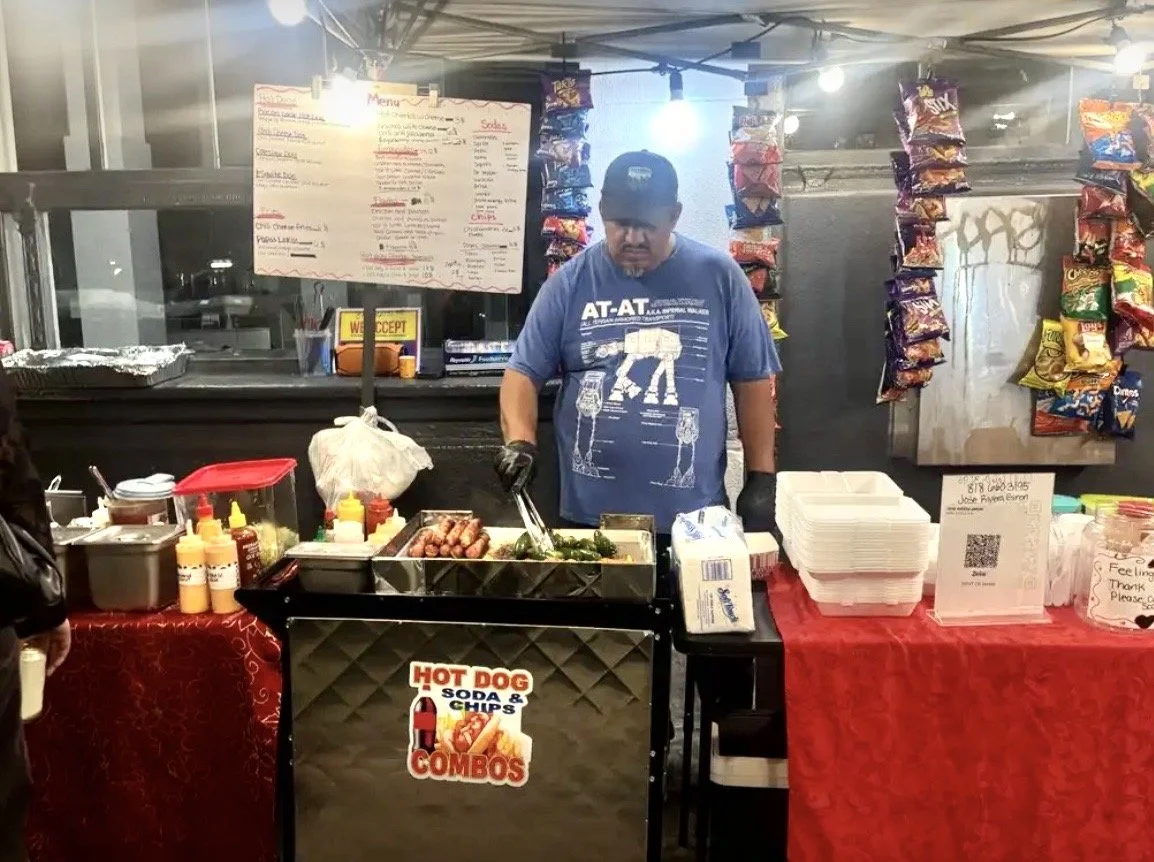
Pomona spent $309,642 in overtime enforcing its sidewalk vending rules over the past two years. The City collected $7,763 from the fines it handed out.

That is one a hell of a gap.

The numbers appear in a new City report scheduled to go before the Pomona City Council on September 21. The report covers the City’s sidewalk vending crackdown from late 2024 through August 2026.

Code Compliance, Public Works and the Pomona Police Department conducted 106 enforcement operations, usually during evenings and weekends. Each operation lasted approximately six hours.

The City issued 419 citations carrying $143,126 in fines. Only about 5.4 percent of that money has been paid.

Pomona also impounded vending equipment 31 times. Vendors returned to retrieve their equipment in four cases. The report does not say what happened to the other 27 impounds.

The City Council originally approved $200,000 in overtime for vending education and enforcement during the 2024 to 2025 fiscal year. The reported overtime expenses have now passed that amount by $109,642.

Code Compliance spent $127,647. Police spent $116,078. Public Works spent $65,917.

There was no money specifically budgeted for sidewalk vending enforcement during the following two fiscal years. The departments are now pulling those expenses from their regular overtime budgets.

All of this was done to enforce rules against a fairly small group of permitted vendors.

Pomona issued 44 sidewalk vending permits during the reporting period. Only 16 are currently active. Eighteen expired and are waiting for renewal. Six businesses closed. Three permits are inactive and one application remains unprocessed.

The permits brought in $7,832. Add that to the $7,763 collected in fines and Pomona received about $15,595 while spending $309,642 in overtime.

The program was not necessarily created to make money. But the numbers raise an obvious question about what Pomona received for what it spent.

Before enforcement began, the City says Code Compliance spent 45 days conducting street outreach. More than 150 verbal warnings and referrals were given to vendors.

Pomona and the Los Angeles County Department of Public Health held a workshop in November 2024 that attracted more than 80 people. Another workshop held in January 2026 drew approximately 50 to 60 people.

The report says vending brochures and workshop flyers were provided to Gente Organizada and the Pomona Economic Opportunity Center to assist with outreach. It does not say either organization supported the ordinance or participated in enforcement.

Gente has published criticism of the City’s approach.

In a February 27 op-ed published by Gente Organizada, Cal Poly Pomona sociology professor Bianca N. Haro-Villa wrote that the ordinance had pushed vendors from Pomona’s streets while imposing requirements many immigrant, low income and renting families could not realistically meet.

Haro-Villa wrote: “Los vendedores ambulantes son empresarios, no criminales” — “Street vendors are entrepreneurs, not criminals.”

She also argued that the options presented at the City’s January workshop, including home food businesses and private markets, did not reflect how many vendors actually live and work.

Still, fewer than two dozen sidewalk vending permits are active.

Street vendors must first receive a permit from the County Department of Public Health. Pomona will not accept their city applications without it. Vendors must also carry liability insurance, which City staff says can cost approximately $30 per month.

The City says insurance protects Pomona, vendors and the public when accidents, foodborne illnesses or property damage occur. Los Angeles city and county do not require sidewalk vendors to carry similar insurance, according to the report.

No claims or lawsuits related to sidewalk vending were filed during the reporting period. The last claim against Pomona involving sidewalk vending was filed in 2022.

The report leaves out quite a bit.

It does not say how many individual vendors received the 419 citations. It does not identify where the 106 enforcement operations happened. It does not say how many fines are being appealed, how many vendors were repeatedly cited or whether cited vendors eventually received permits.

It also does not explain what the City plans to do with the 27 impounded carts and pieces of equipment that were never retrieved.

The council is not being asked to change the vending law Monday. The report sits on the consent calendar, where the council is being asked to receive it and place it on file.

For now, the clearest result is sitting inside the City’s own numbers: $309,642 in overtime, 419 citations and $7,763 collected.

Read the City’s full sidewalk-vending enforcement report here


The Pomonan is an independent publication of essays, criticism, photography, and cultural commentary.
The East Holt PBID: An Investigative Timeline of Money, Consultants and Questions

Have you ever wondered why it has been more than five years since the City of Pomona has discussed creating a Property Business Improvement District, or PBID, along the East Holt Avenue corridor? 

In 2021 the City of Pomona budgeted money for a PBID consultant. Two years later in 2023, the City hired Civitas Advisors, to form an East Holt Property Business Improvement District (PBID). Presently, the Pomona Chamber of Commerce continues to call the East Holt PBID a “current project.” But there is still no East Holt PBID.

We are releasing a timeline of the proposed East Holt PBID, the public money budgeted for it, the involvement of Civitas Advisors and the Pomona Chamber of Commerce, and the lack of answers from the City of Pomona about where the project stands today.

What is a PBID?

A Property Business Improvement District, or PBID, is a defined area where property owners pay an additional assessment to fund services within the district.

Those services can include security, street cleaning, maintenance, marketing, economic development and other improvements beyond what the City normally provides.

In that sense, a PBID shifts some responsibility for managing a commercial district away from City government and into a separately managed organization funded through assessments on property owners.

The City helps establish the district, but ultimately, property owners foot the bill. However in most cases depending on the lease, property owners may pass the PBID assessment on to their business tenants.

What a PBID also does is privatize some of the management of public space within its boundaries. Public streets and sidewalks remain public, but services traditionally provided by the City, including security, can instead be administered through a private organization.

Creating a PBID requires identifying the properties within the proposed district, determining assessments, developing a management plan, gaining property owner support and going through a petition and ballot process. This is important to the East Holt story.

Pomona was not simply discussing another City program. It was attempting to create a district that could eventually collect assessments from East Holt property owners to pay for services within the corridor.

Which raises perhaps the most basic question. Did the property owners along East Holt actually want one?

March 22, 2021

Pomona city staff presented its preliminary Fiscal Year 2021-22 General Fund budget. However, a PBID consultant was not specifically listed among the major increases in the preliminary budget.

However, the budget was still a work in progress. The city staff stated that the proposed budget would return to City Council for a Budget Study Session on May 10, and followed by final adoption on June 7.

One of the remaining issues was to identify funding sources, if available, for the City Council’s upcoming goals and priorities. Was this the beginning of the funding for an East Holt PBID? 

May 10, 2021

City Council held its Fiscal Year 2021-22 Budget Study Session. By this time, $90,000 for a PBID consultant appeared in the proposed General Fund budget. The $90,000 was listed as a controllable expense along with several other City contract increases. At this time there was no mention in this section of who the PBID consultant would be.

June 7, 2021

City Council considered adoption of the Fiscal Year 2021-22 Operating Budget. In the final staff report, the City again listed: “$90k for PBID consultant.”

The money was listed along with $400,000 for landscape maintenance, $150,000 for redistricting commission support, $150,000 for Police Commission support, $70,000 for grant writer services and $140,000 to restore a crosswalk contract.

Resolution No. 2021-69 was presented for adoption of the Fiscal Year 2021-22 Operating Budget. Therefore, by June 2021 the City had incorporated $90,000 in its budget for a PBID consultant. But who was the consultant? What work was the consultant supposed to complete? And was the consultant ever paid the budgeted $90,000. Or was the $90,000 ever spent.

June 21, 2021

Two weeks later, the City of Pomona published its City Council Priorities and Goals.

Under Goal H the City stated:

“Encourage and support Property Business Improvement Districts (PBIDs) to support business development.”

Under Economic Development, Step 1 was:

“Request funding of $100,000 in the FY 2021-22 Operating Budget to support creation of a PBID for Segment of East Holt and, if funded, complete the evaluation by June 2022.”

In the comments section, the City stated:

“Funding approved in FY 2021-22 budget.”

Interestingly enough now there are two numbers. The City’s budget documents say $90,000 for a PBID consultant. The City’s Council Priorities and Goals say $100,000 to support creation of an East Holt PBID. Which one is it? Was the $90,000 the consultant portion of the $100,000 and the remaining $10,000 was intended for other costs associated with creating the district?  Or were these two different amounts? And why? 

What the City’s own documents do show is that funding was approved and the City expected an evaluation of the East Holt PBID to be completed by June 2022.

June 2022

The city gave itself a deadline to have completed the east Holt PBID evaluation, however that deadline passed. The Pomonan has not located a completed East Holt PBID evaluation from this period.

Was the evaluation completed? If it was, what were the results? If it wasn’t, what happened to the money? 

August 2023

More than two years after the City budgeted money for a PBID consultant, Mayor Tim Sandoval discussed the East Holt PBID with the Pomona Chamber of Commerce.

According to the little engine that could, La Nueva Voz, “Pomona’s Only Local Newspaper”, Sandoval said the City was working with the Chamber to create a business improvement district along East Holt similar to the Downtown Pomona Owners Association. The proposed district could provide services such as marketing, security and upkeep. So, more than two years after funding was approved, the East Holt PBID was still being discussed as something to be created.

December 2023

The City of Pomona hired Civitas Advisors, a Sacramento based consulting firm, to form the East Holt PBID, according to a January 2024 report in La Nueva Voz.

The consultant’s work was to include a preliminary benefits assessment, creation of a stakeholder advisory committee, development of a budget, management plan, engineer’s report, petition and an actual election ballot.

The cost of the project was not to exceed $85,000, based on a fixed fee of $5,500 per month plus expenses for a 12 month period.

Engineering costs were expected to be another $6,000.

This raises another question. If money had already been approved for a PBID consultant in 2021, why was the City hiring Civitas Advisors in late 2023?

Was Civitas the consultant contemplated by the original funding?

Was another consultant hired before Civitas?

Was the original money never spent?

Or was Civitas paid from an entirely different source?

The Pomonan does not know.

That is why the financial records matter.

January 25, 2024

La Nueva Voz published, “Pomona hires Sacramento firm to form new ‘East Holt’ business improvement district.”

Pomona Economic Development Director Kirk Pelser told the newspaper that Civitas had been hired to form the district.

The scope of work described was not simply to study whether somebody might want a PBID someday. It included steps toward actually forming one, including a stakeholder committee, budget, management plan, engineer’s report, petition and election ballot.

The contract amount, however, does not tell us how much Civitas was actually paid.

An $85,000 contract ceiling is not an $85,000 payment.

The Pomonan has asked the City for invoices and payment records to determine how much Civitas was paid and what work was completed.

2024 - 2025

Perhaps this is where the trail becomes less clear.

Civitas was reportedly hired for a 12 month engagement beginning in late 2023.

The Pomonan has not located a property owner petition, election ballot or announcement establishing the East Holt PBID.

Nor has The Pomonan located an announcement from the City explaining that the project ended.

If the project stopped, when did it stop?

If it continued, what happened during this period?

2026

The Pomona Chamber of Commerce continues to list the East Holt PBID as a current project of its Economic Development Committee.

The Chamber states:

“Current projects include the Property Business Improvement District (PBID) along the East Holt Corridor…”

This language has appeared on Economic Development Committee meeting notices throughout 2026.

The committee is chaired by Hector Lopez and Monique Robles.

Perhaps the Chamber has continued the work that began with the City and Civitas.

Perhaps the description on the Chamber website is old.

But if the East Holt PBID is in fact a “current project,” what is currently happening?

Who is leading it?

The City of Pomona?

The Pomona Chamber of Commerce?

Civitas Advisors?

What are the proposed boundaries?

Has an assessment formula been created?

Have East Holt property owners been contacted?

Have petitions been circulated?

Has there been a ballot?

And after five years, how close is East Holt to actually having a PBID?

August 16, 2026

The Pomonan submitted a California Public Records Act request to the City of Pomona seeking records regarding the East Holt PBID.

The request included the Civitas contract, purchase orders, invoices and payments, consultant deliverables, engineer reports, stakeholder committee records, property owner and business outreach, correspondence between Civitas and the City and records showing the current status of the PBID.

The Pomonan also requested records accounting for the $100,000 identified in the City’s 2021 Council Priorities and Goals, including expenditures and records showing what happened to any money that remained.

August 27, 2026

After receiving no determination from the City, The Pomonan followed up on the request.

August 28, 2026

The City responded:

“City staff are still determining whether there are documents responsive to your request. Our office expects to provide you with a follow up response by September 3.”

By this point, The Pomonan had already located City documents because we have nothing better to do with our time. The documents showed $90,000 for a PBID consultant and the City’s Council Priorities and Goals stating $100,000 in funding was approved to support creation of an East Holt PBID. 

The question was no longer whether the City had discussed funding the project. The City’s own records show that it did. The question is what happened after that.

September 3, 2026

The date the City said it expected to provide The Pomonan with a follow up response. No response was ever received.

September 4, 2026

The Pomonan submitted two additional California Public Records Act requests to the City.

One asks specifically for the accounting records related to the East Holt PBID funding, including general ledger transactions, expenditures, encumbrances, purchase orders, payments, transfers, journal entries, budget adjustments and the disposition of any money that was not spent.

The second request follows Civitas Advisors as a City vendor, asking for contracts, purchase orders, invoices, payments, amendments and other accounting records.

The requests were submitted separately because The Pomonan does not know if the 2021 PBID funding and the 2023 Civitas contract are connected.

September 8, 2026

As of the end of the business day, The Pomonan had not received the follow up response the City said it expected to provide on September 3.

The Pomonan also contacted Civitas Advisors asking whether it completed its work for the City, the outcome of that work, whether Civitas remains involved and whether the East Holt PBID ever reached the property owner petition or ballot stage.

The Pomonan contacted the Pomona Chamber of Commerce asking about its involvement with the PBID, who is currently leading the effort, whether Civitas remains involved and whether the project has advanced to property owner outreach, petitions or balloting.

As of September 8, The Pomonan had not received a response from Civitas Advisors or the Pomona Chamber of Commerce. 

In 2021, the City of Pomona’s budget included $90,000 for a PBID consultant.

That same year, the City’s Council Priorities and Goals stated that $100,000 in funding was approved to support creation of an East Holt PBID and that the evaluation would be completed by June 2022.

More than two years later, the City hired Civitas Advisors under a contract not to exceed $85,000 to form the district.

Now, in 2026, the Pomona Chamber of Commerce continues to call the East Holt PBID a “current project.” But there is no East Holt PBID.

This does not necessarily mean the City spent $90,000 or $100,000. A budget is not the same thing as an expenditure. It also does not mean Civitas received the entire $85,000 allowed under its contract.

The records should show what was actually spent and what work was actually completed.

If no money was spent from the original funding, where did it go? 

If money was spent, who received it and what did Pomona receive in return?

If Civitas completed its work, what was the outcome?

If property owners rejected the PBID, where are the records showing that?

If the project ended, why does the Pomona Chamber of Commerce still call it a current project?

And if the project is still alive, what exactly is happening with it today?

These are questions that should not take five years of City budgets, Council goals, newspaper archives, Chamber meeting notices and public records requests to answer.

The City of Pomona should be able to account for what happened. The Pomonan has asked for the records.

As of publication, the City has not provided the follow up response it said it expected to provide by September 3.

The City also failed to provide the determination required by the California Public Records Act within the statutory timeframe for the original August 16 request.

The public should not have to piece together five years of government records to find out what happened to a funded City project for which public money was budgeted.

The Pomonan reached out to both Civitas and the Pomona Chamber of Commerce regarding the East Holt PBID. Both organizations did not respond to our request for comment.


Julian Lucas is a darkroom photographer, writer, and a bookseller, though photography remains his primary language. He is the founder of Mirrored Society Book Shop, publisher of The Pomonan, and creator of Book-Store and Print Pomona Art Book Fair. And yes he will charge you 2.5 Million for event photography.

Pomona Students Gather in Protest as Part of Nationwide Action Against ICE

Photography Julian Lucas ©2026

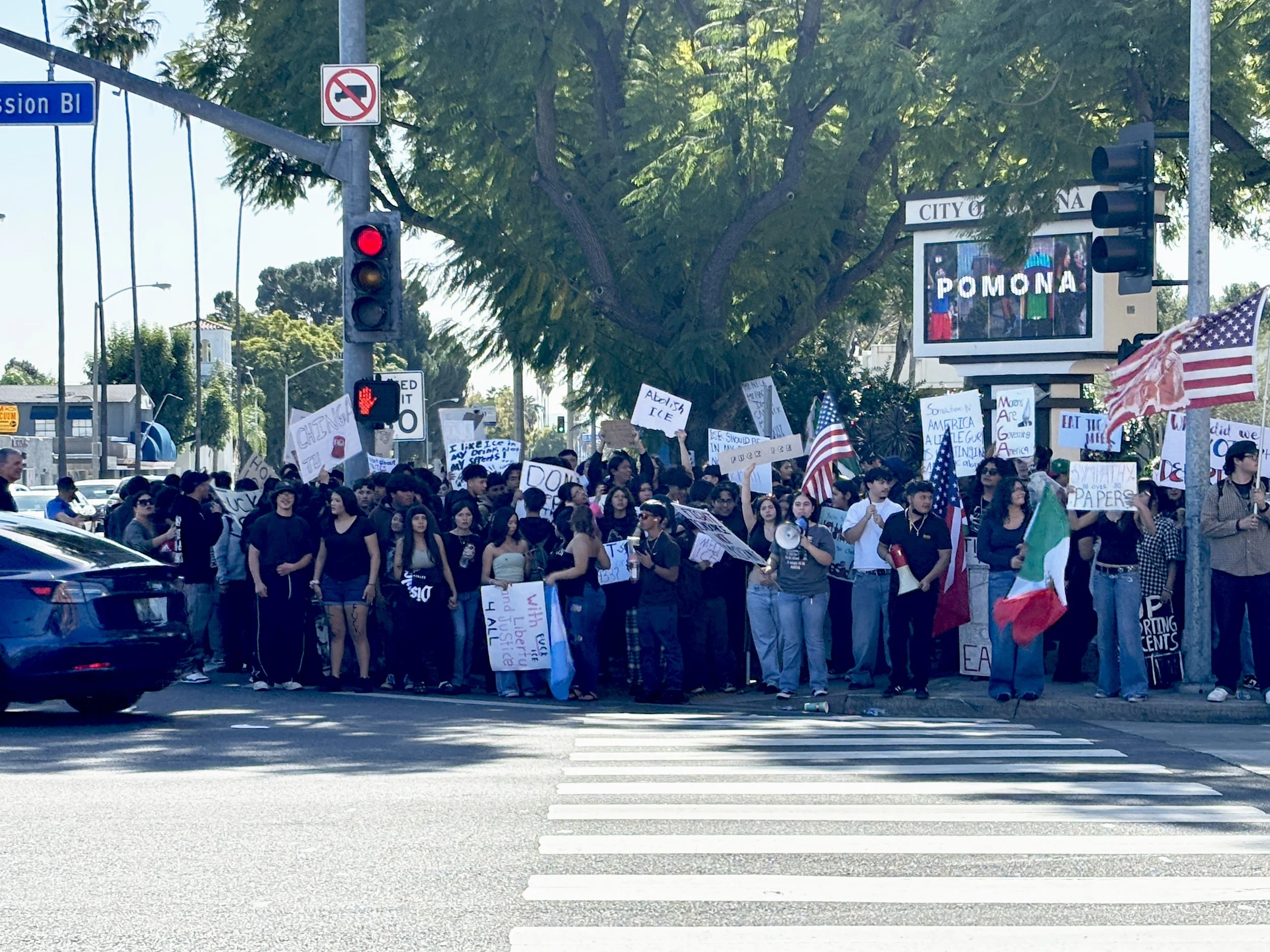
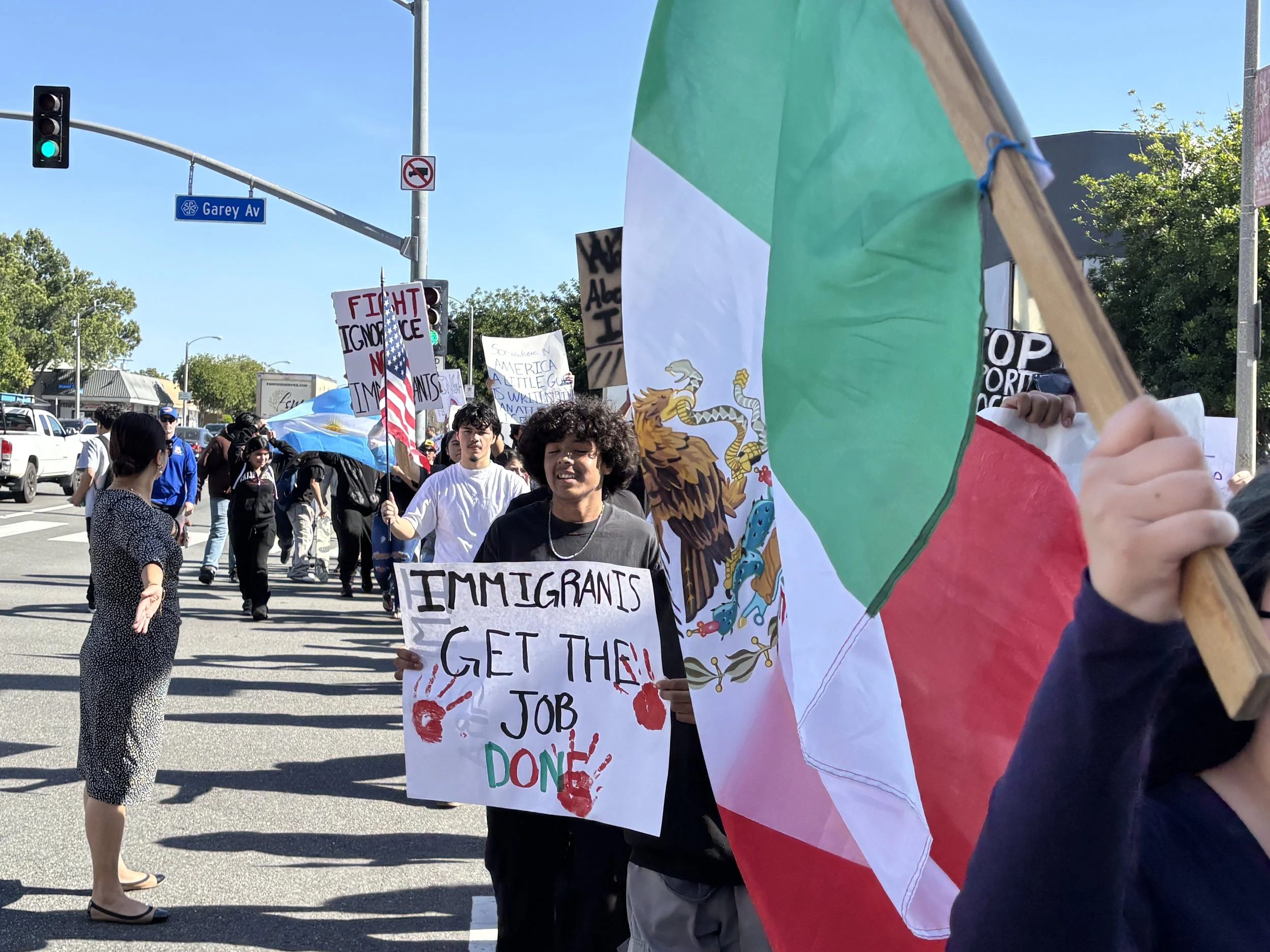
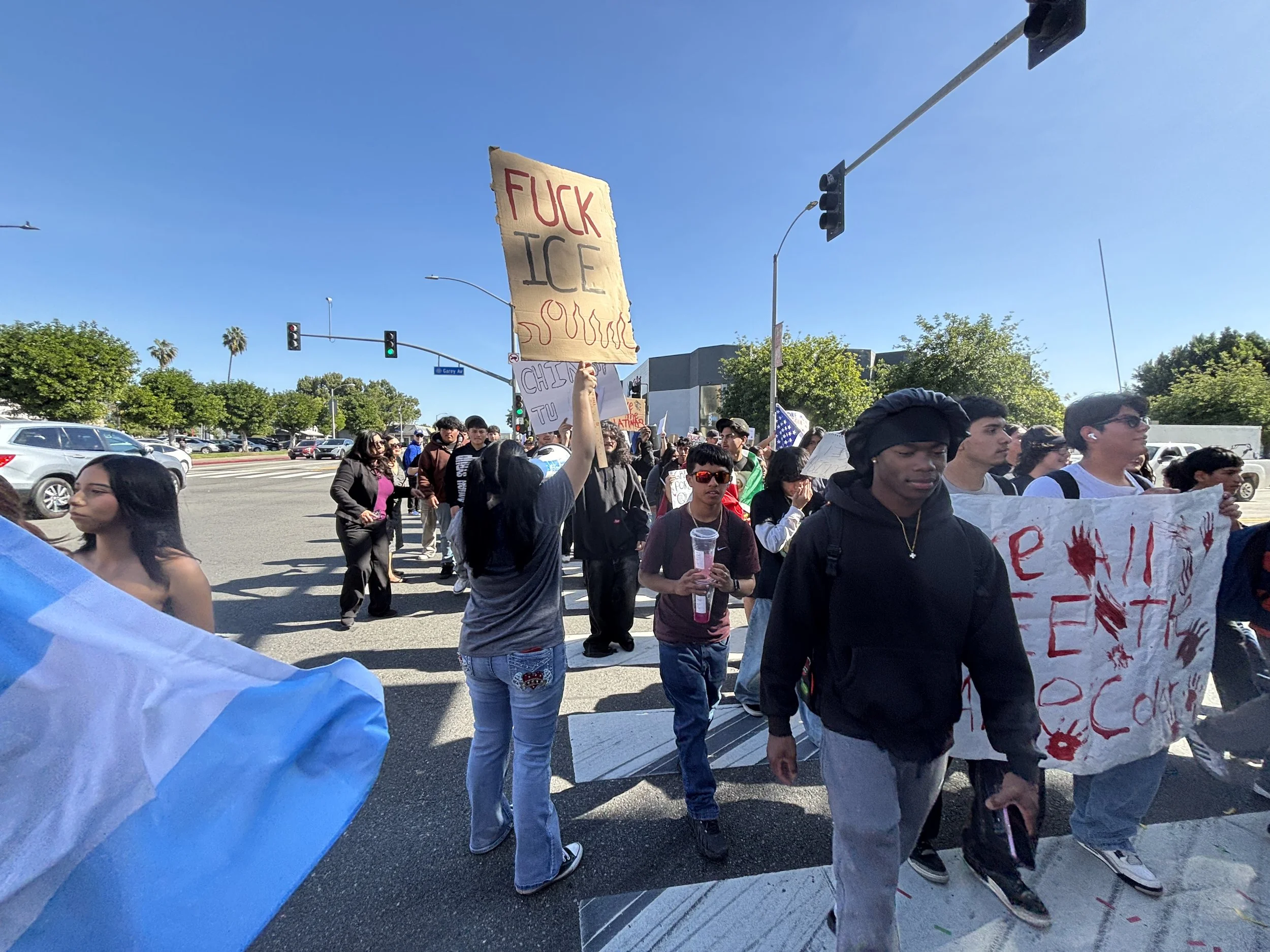
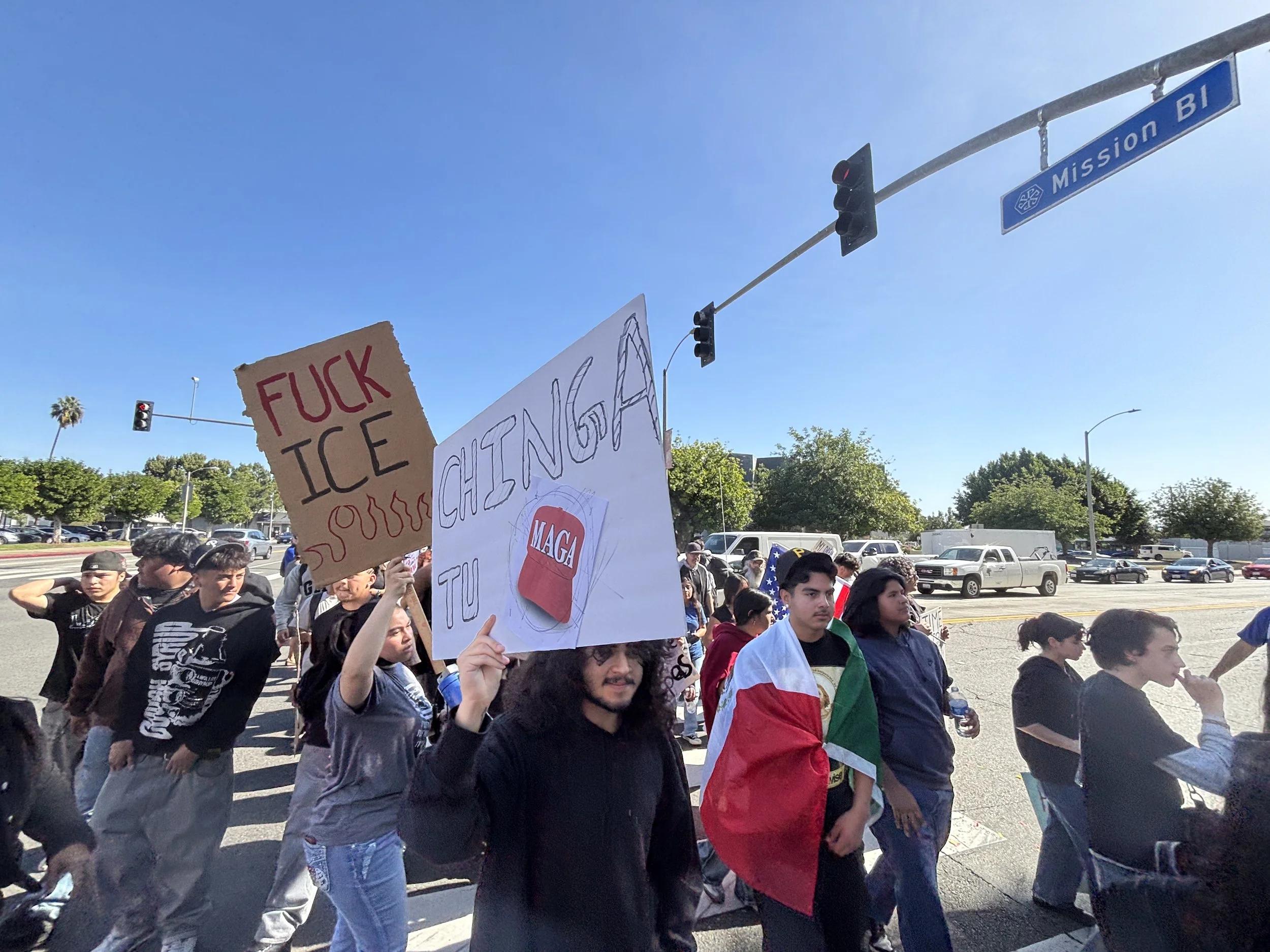
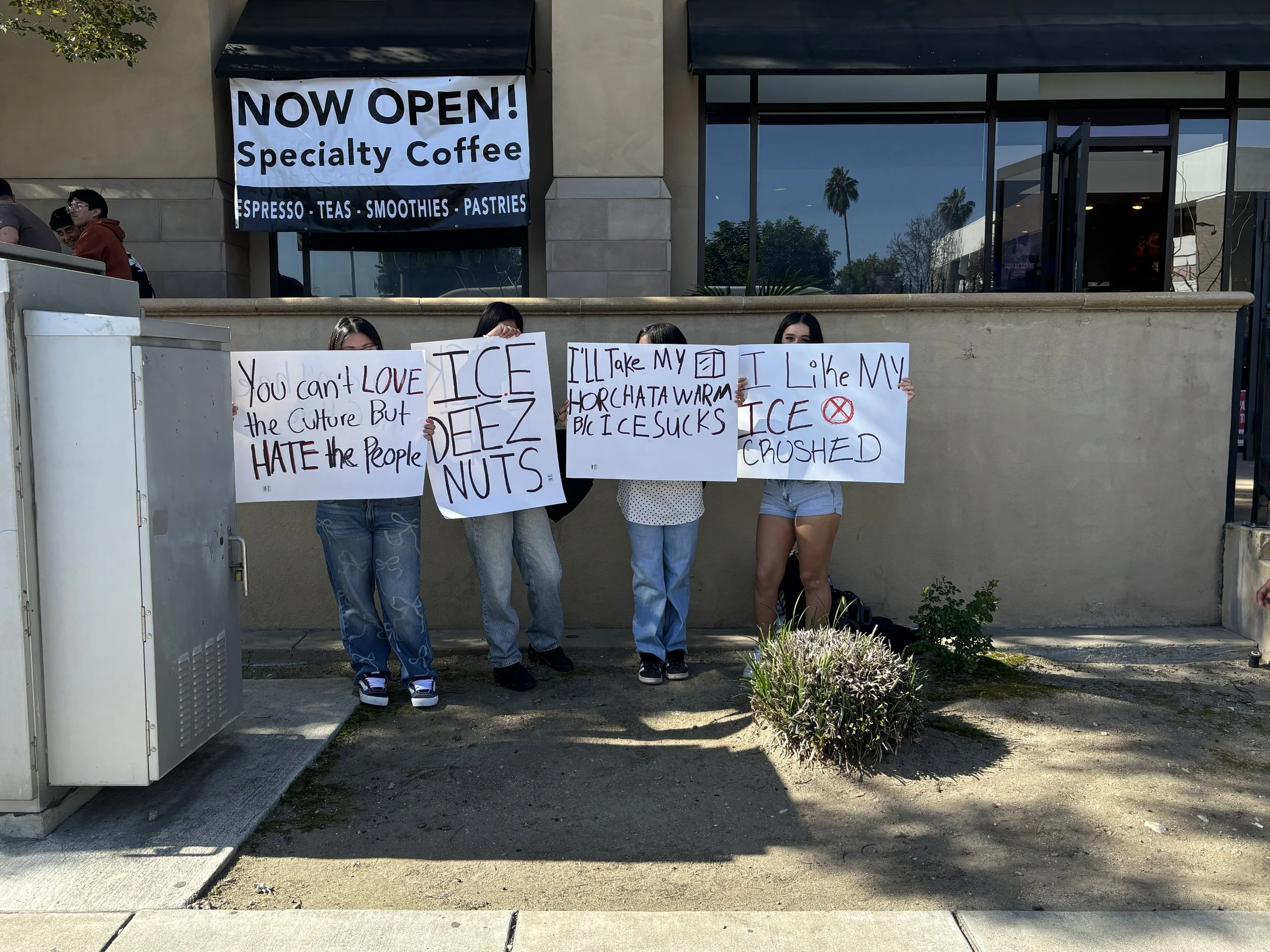
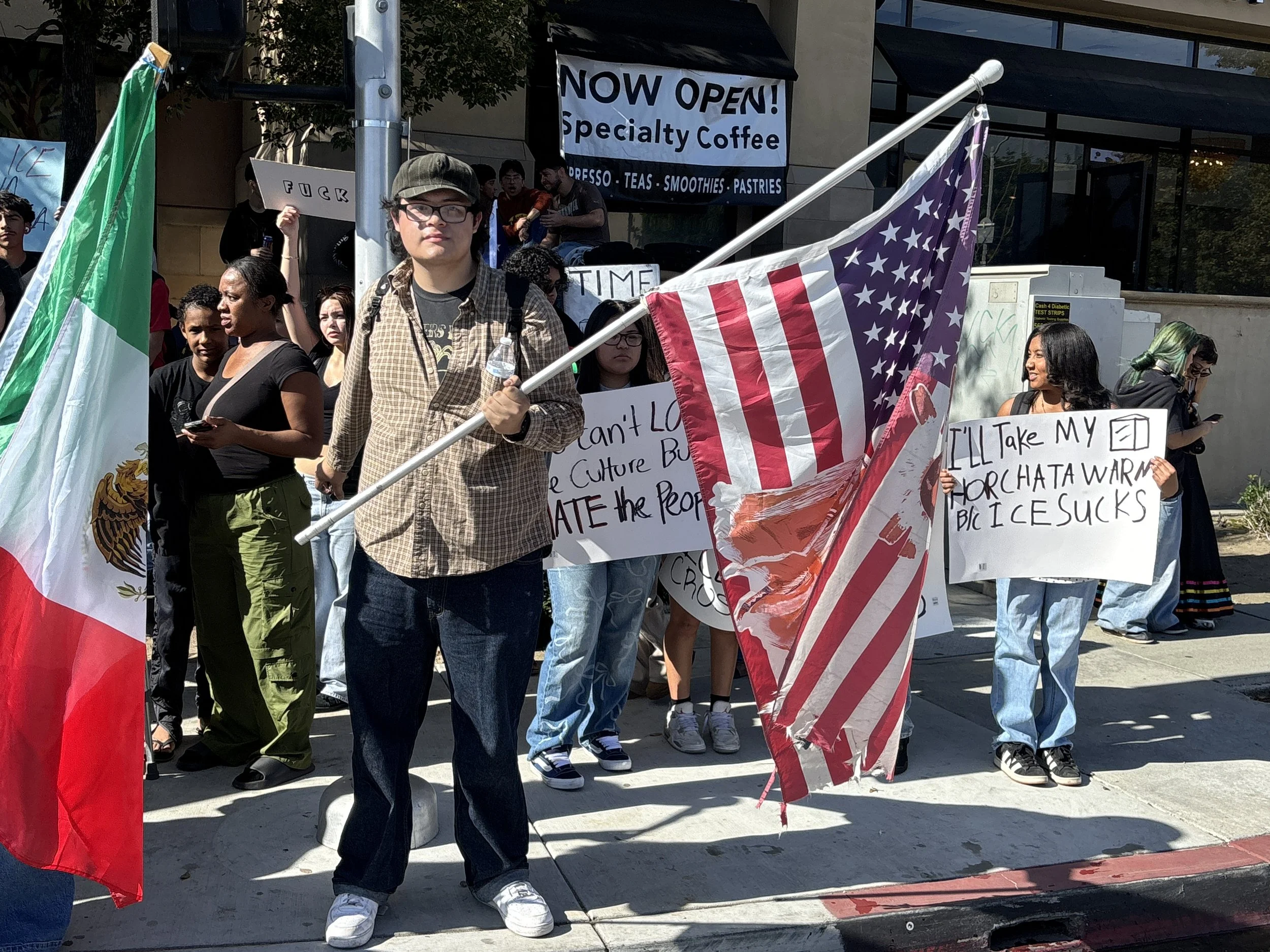
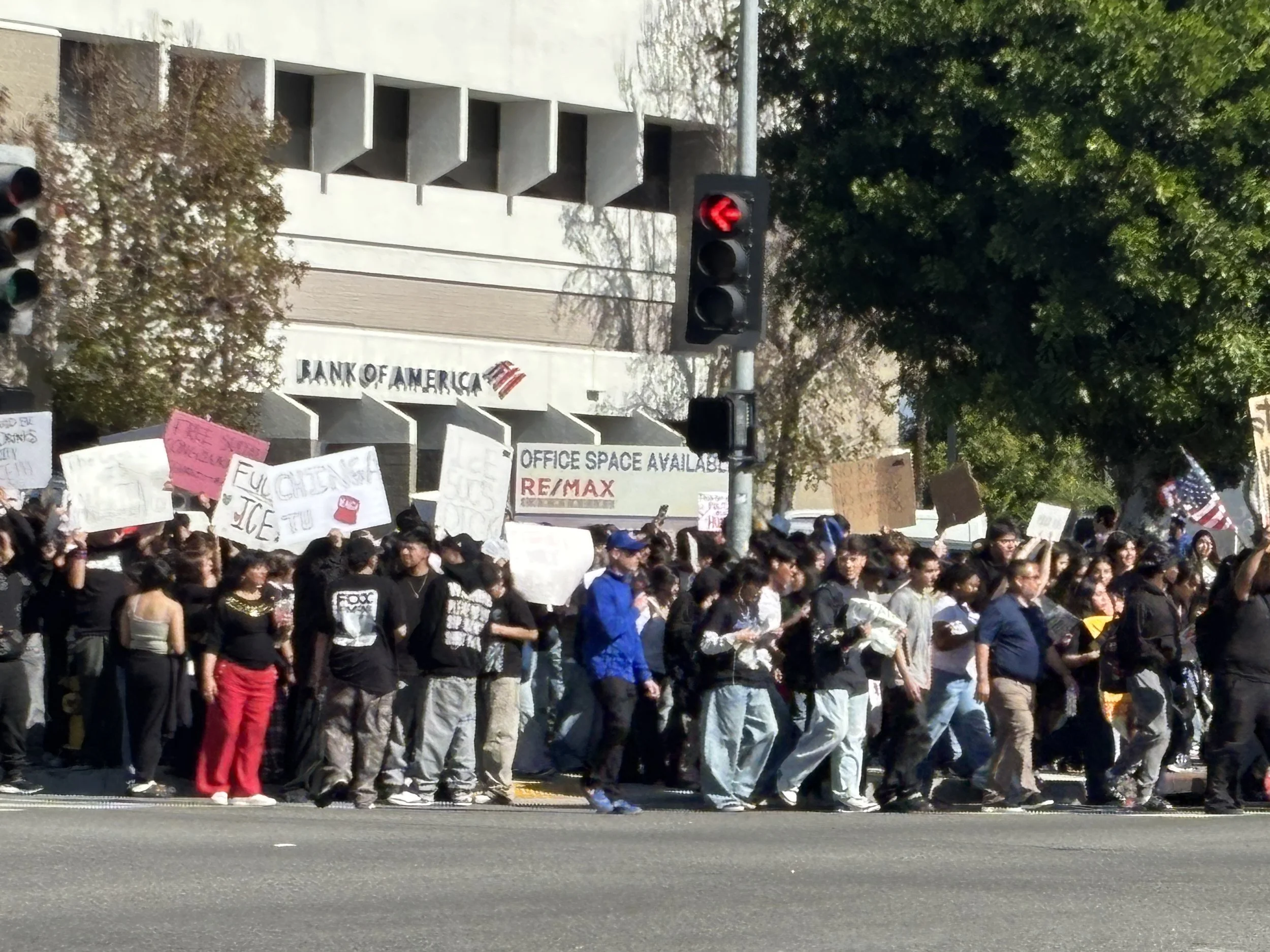
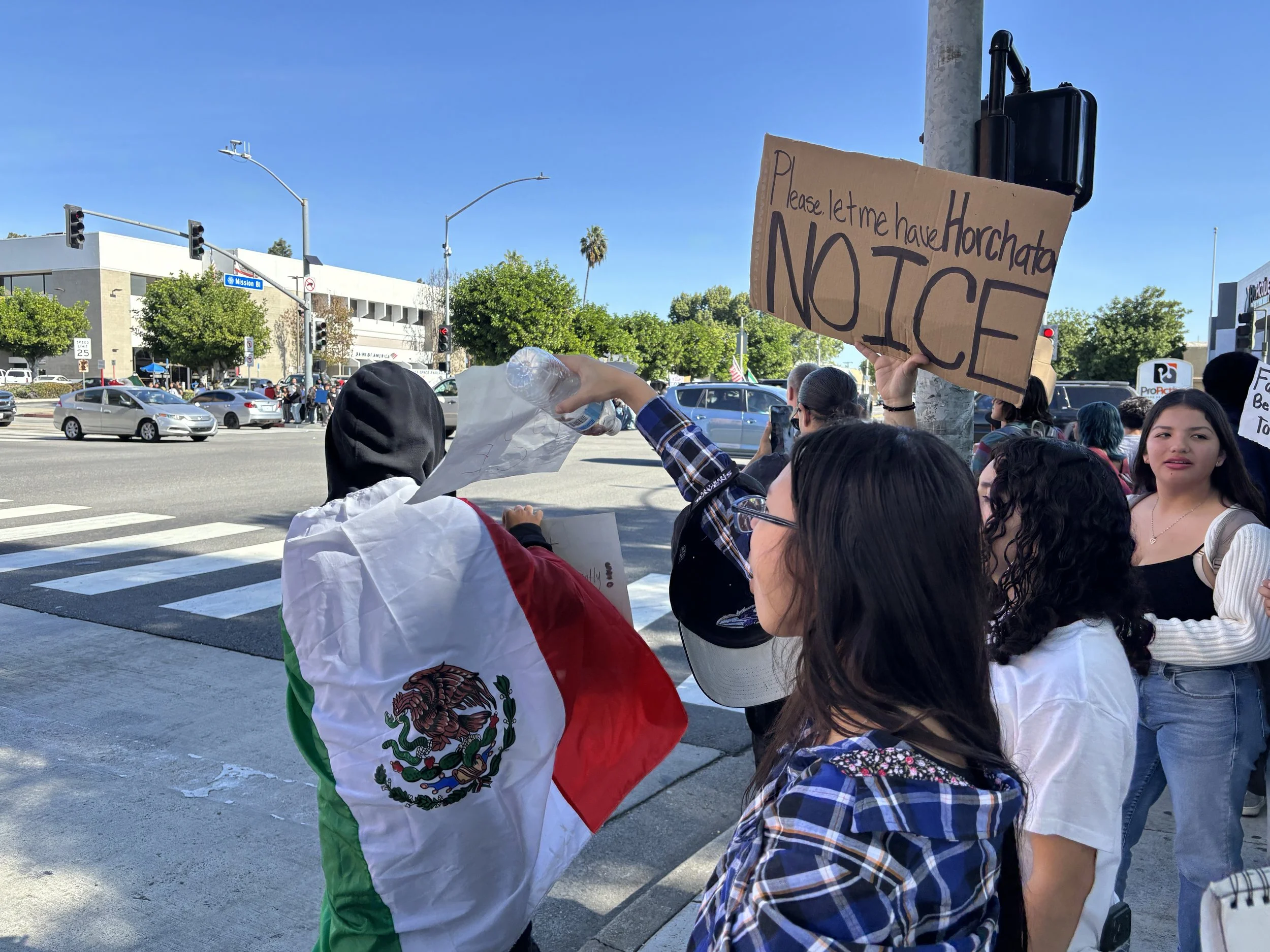
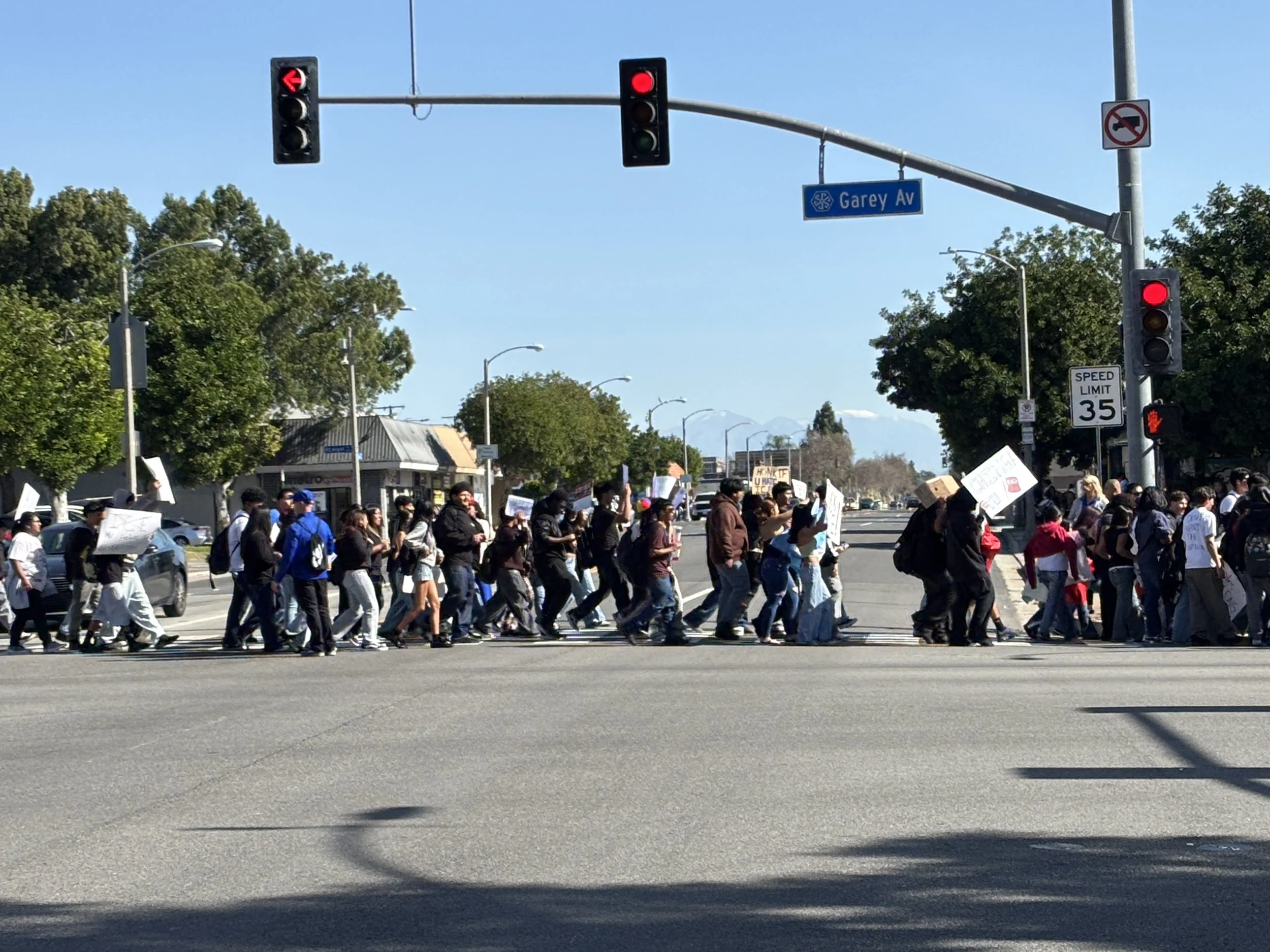
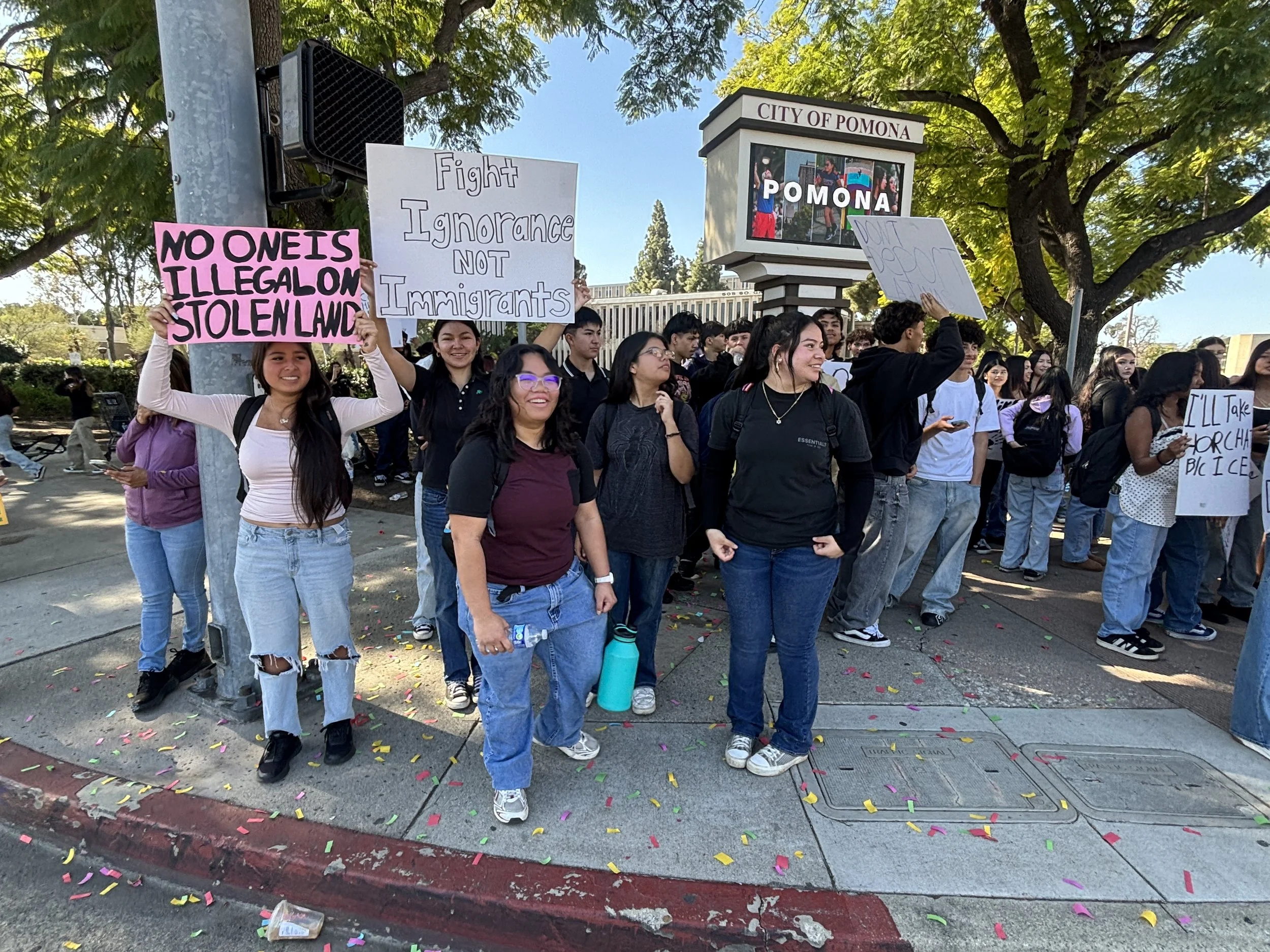
Pomona, CA — On Friday morning, January 30, 2026, students from Pomona High School, Garey High School, The School of Arts and Enterprise, and Village Academy all gathered at the intersection of Mission Boulevard and Garey Avenue to protest federal immigration enforcement and recent deaths in ICE custody. The demonstration took place alongside similar actions occurring across the country, including in Los Angeles and New York City.

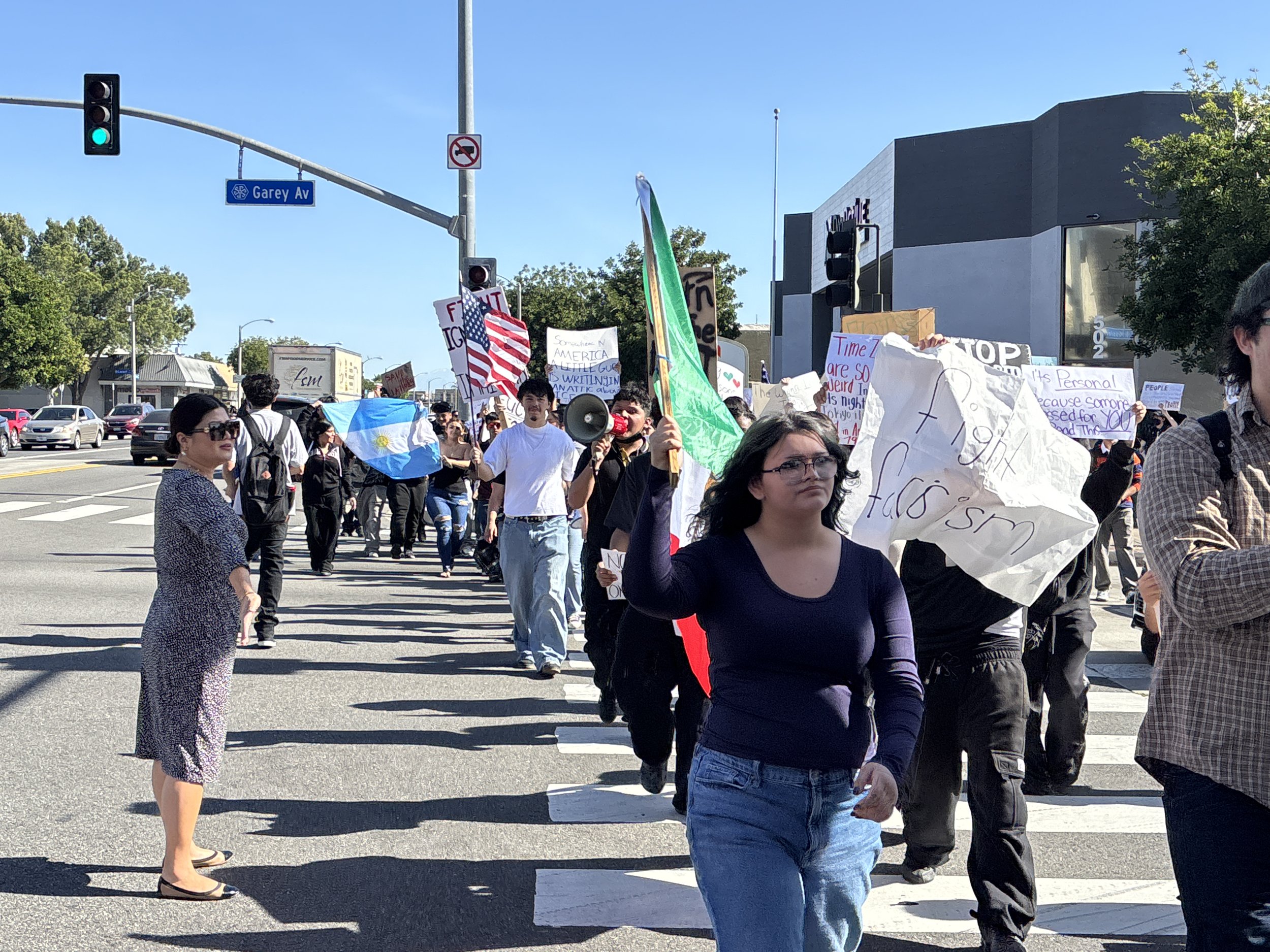
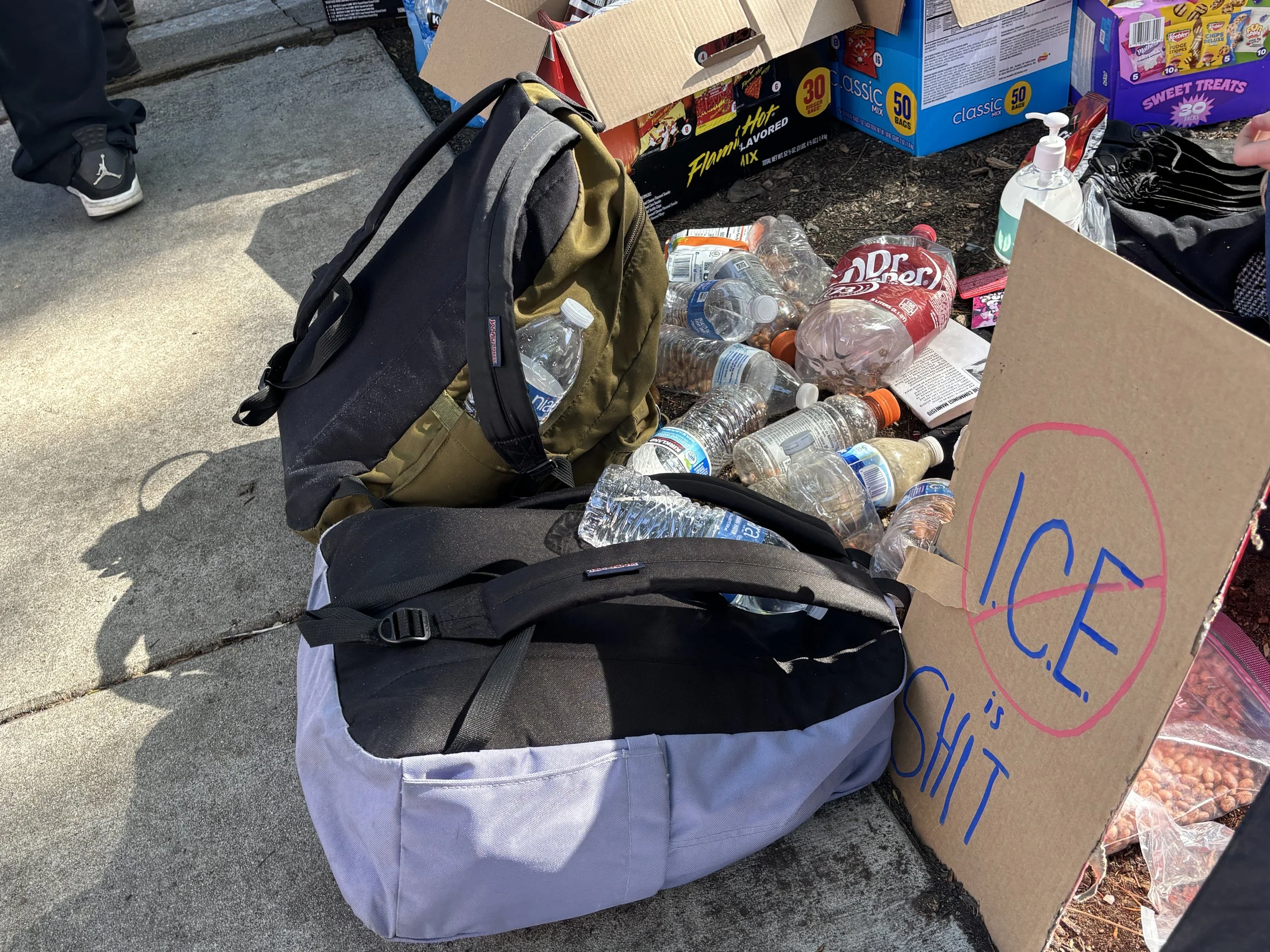
A large group of students moved through the intersection carrying handmade signs, forming a loud and visible protest against Immigration enforcement. School leadership were present alongside the students as the demonstration continued through the area.

The protest coincided with a nationally circulated call for a “no work, no school, no shopping” day of action, promoted online in response to deaths reported in ICE detention facilities earlier this month. While there was no visible central organizer or formal program in Pomona, the messaging echoed themes seen in protests elsewhere: opposition to ICE’s role in immigration enforcement and anger over deaths occurring while individuals were in federal custody.

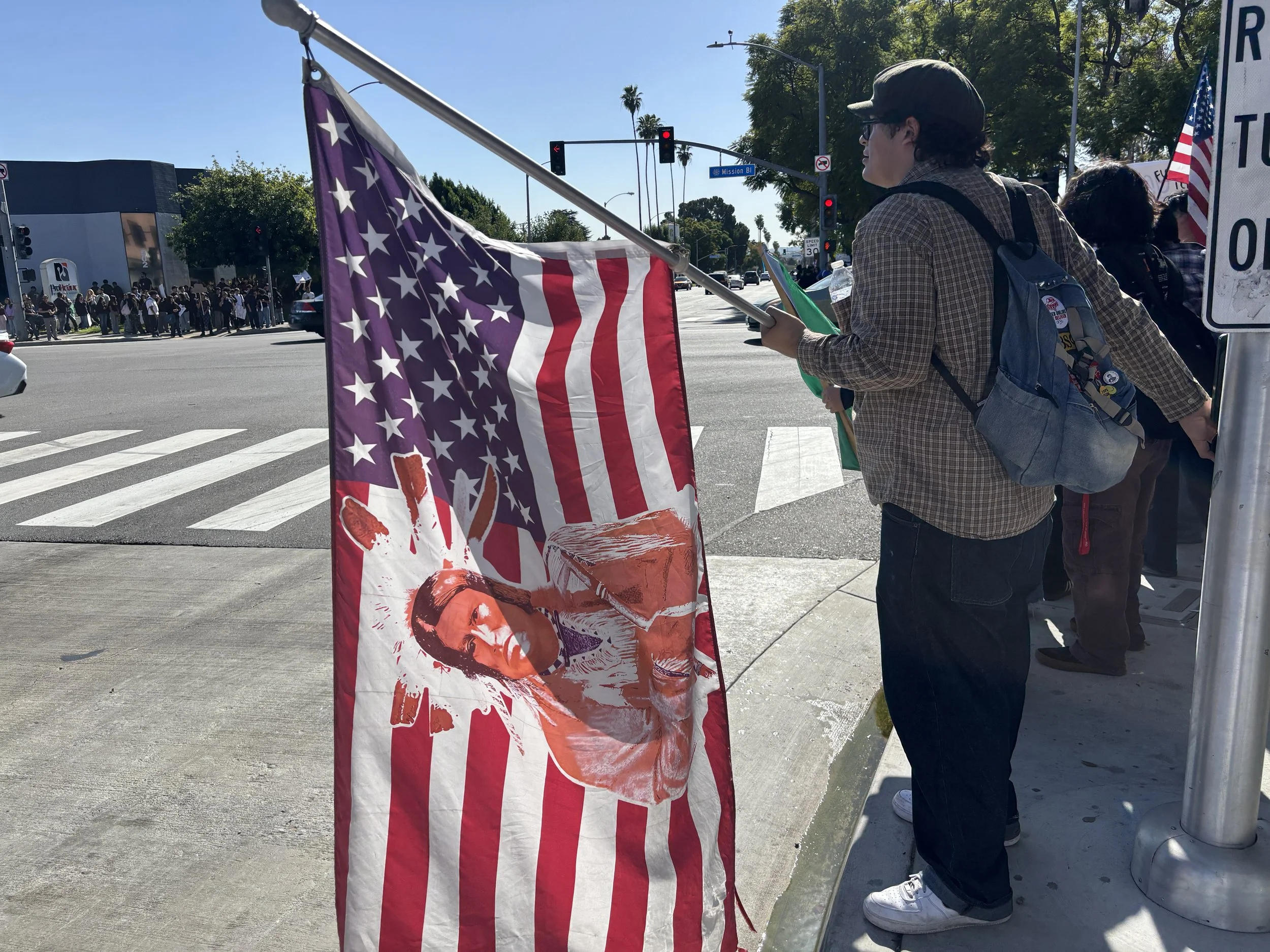
Students carried signs criticizing ICE directly, mixing humor and frustration. Several participants waved Mexican, American, Puerto Rican Flags. An altered American flag appeared among the crowd, its imagery repurposed to question traditional expressions of patriotism.

Students chanted “Who’s streets, our streets” as they moved through the intersection. The group crossed Mission Boulevard together while adults supervised and guided students. Traffic slowed and stopped, with some motorists honking in solidarity while others supported as they watched quietly and raised a fist from their out the windows of their vehicles.

The demonstration remained peaceful throughout. No police presence, and there were no visible confrontations.

Pomona has long been shaped by immigration policy in ways that are felt directly by families, schools, and neighborhoods. For many of the students present, the issue was not abstract or ideological but rooted in personal and family experience. The absence of formal structure gave the protest an organic quality, less a rally than a collective decision to be seen.

A review of public district communications did not show any official statements from Pomona Unified School District or individual high schools regarding the student gathering as of publication. While school districts and city officials had not issued public statements, the gathering reflects a broader pattern of youth political activity taking place nationwide in early 2026. The students who gathered in Pomona placed themselves visibly within that national moment.


Julian Lucas is a darkroom photographer, writer, and a bookseller, though photography remains his primary language. He is the founder of Mirrored Society Book Shop, publisher of The Pomonan, and creator of Book-Store and Print Pomona Art Book Fair. And yes he will charge you 2.5 Million for event photography.

Pomona PD Withholds Homicide Data Despite Law

In Pomona, victims don’t even get a sentence. No report. No record. No responsibility.

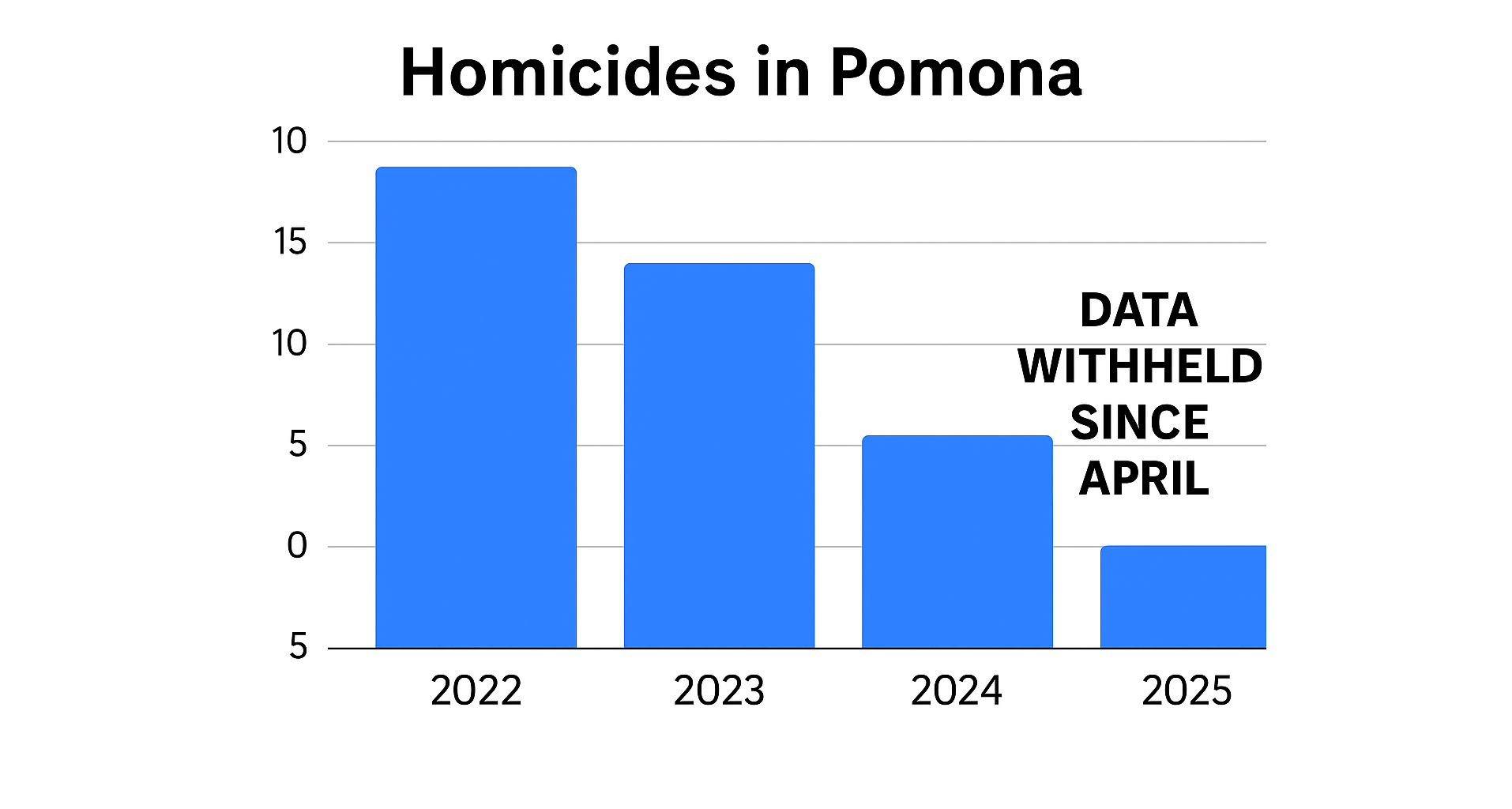
For the last four years, The Pomonan has tracked homicides in our city because no one else consistently has. Our Homicide Reports for 2022, 2023, 2024, and now 2025 have served as a quiet but critical record of loss, names rarely given, but lives never ignored. We track dates. Streets. The silence. And we do it without a newsroom, without a budget, without institutional protection.

But this summer, something changed. Or rather, it didn’t.

On July 23, 2025, multiple residents reported an alleged homicide near East Holt. Witnesses described seeing heavy police presence and crime scene tape, yet no public statement was ever issued. Unlike earlier cases this year, the Pomona Police Department has withheld even the most basic details: the date, location, the fact that someone may have died.

When a California Public Records Act (CPRA) request asking for basic summary information on all homicides from January 1 to July 31, 2025 I didn’t ask for anything sensitive. No autopsies. No suspect files. Just the information they used to provide:

  • Date and time

  • General location

  • Victim demographics

  • Case status

  • Assigned unit

  • Incident number

They denied the request.

The reason? A vague invocation of Government Code § 7923.600, usually reserved for withholding investigative files. But full investigation were not requested. What was asked for is what they usually release themselves on Nixle.

In fact, the Pomona Police Department posted a homicide report as recently as April 25, and even reported an attempted homicide on August 14. The contradiction is glaring.

When Transparency Becomes Optional

It’s not just about a missed press release. It’s about trust. It’s about a public institution deciding when the public gets to know someone has been killed in their community.

Pomona has a long, uncomfortable relationship with image management. What doesn’t get reported still happened—but if it’s not acknowledged, is it easier to pretend we're safer than we are? Is that the calculation?

When an app built for lost dogs and lawn sales out performs on informing the public than City Hall, something’s wrong.

What Comes Next

The City of Pomona and its Police Department were legally required to respond to the public records request within 10 days, as mandated by California law. More than 25 days have passed.

The matter is now under escalation, with the First Amendment Coalition and legal advocates formally informed. If necessary, I’ll file a writ of mandate in Superior Court. Not because I want to, but because I shouldn’t have to fight for information the public is entitled to.

Because if they don’t have to tell us someone died in our city, what else can they keep from us?

If someone in your family has been lost to violence this year, the City of Pomona may not be publicly acknowledging it. That silence speaks volumes.


Julian Lucas is a photographer, writer and provocateur committed to documenting what power tries to hide. Julian is the founder of The Pomonan and founder and owner of Mirrored Society, a bookshop dedicated to fine art books. His work, on the page, in the darkroom, and in the streets, documents what institutions try to forget. He publishes what others try to bury.

Inland Empire Activists to Highlight Norma Torres’ Support for Funding Genocide and Starvation in Gaza

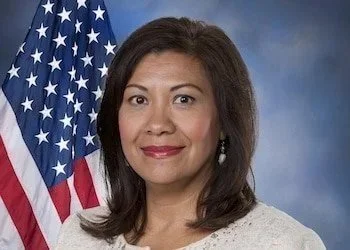
This Friday, July 25th, a ‘banging of the empty pots and pans’ demonstration will take place in the Inland Empire to draw attention to Congress member Norma Torres’ ongoing support for billions in taxpayer funding for Israel as it continues to bomb schools, hospitals, and refugee camps, all while STARVING an entire population that is unable to escape.

The protest will begin at and outside Norma Torres's office in Ontario at 10am pst.


Bisan Owda, a Palestinian journalist and activist from Gaza, has been vocal about the deepening hunger crisis in the territory and has launched the "Stop the Famine" campaign to bring international attention to the dire issue. 

Specifically, Owda is calling for global days of action on July 24 & 25, 2025, urging people to "Bang the Pots" and protest Israel's blockade of humanitarian aid and the resulting starvation in Gaza. 

Owda emphasizes that the current aid efforts, including airdrops, are insufficient and ineffective, She argues the true solution lies in pressuring Israel to lift the blockade and allow aid trucks to enter Gaza freely. 

Additionally, the protest is to put additional pressure on Norma Torres to take concrete steps in ending the genocide by supporting resolutions to block the sale of offensive weaponry to Israel (HR3565). We call for the urgent delivery of aid to Gaza and work to ensure it safely reaches Palestinian civilians - not through the Gaza Humanitarian Foundation which is directly responsible for the deaths of over 1000 Palestinians seeking aid. We also urge Norma Torres to condemn any plans to relocate Palestinians and other countries and so-called humanitarian zones. 

Congressmember Torres has consistently voted in favor of unconditioned military aid to Israel. In April 2024, she voted yes on a $95 billion spending package that included $17 billion in military aid to Israel. Earlier, in November 2023, she voted against H.R. 6126, a resolution that would have imposed restrictions or conditions on that aid, stating, “Our aid and our commitment to Israel must be prompt, significant, and unconditioned.”

For more information, please contact Arianna at (909) 957-2797


Activistas del Inland Empire manifestarán para destacar el apoyo de Norma Torres a la financiación del genocidio y la hambruna en Gaza.

Este viernes 25 de julio se llevará a cabo una manifestación de "cacerolazos" en el Inland Empire para llamar la atención sobre el continuo apoyo de la congresista Norma Torres a la financiación de miles de millones de dólares para Israel, mientras este continúa bombardeando escuelas, hospitales y campos de refugiados, y provoca hambre en toda una población que no puede escapar.

La protesta comenzará en la oficina de Norma Torres en Ontario y sus alrededores a las 10 a. m. (hora del Pacífico).

Bisan Owda, periodista y activista Palestina en Gaza, ha denunciado abiertamente la creciente crisis de hambre en el territorio y ha lanzado la campaña "Alto a la Hambruna" para llamar la atención internacional sobre este grave problema.

En concreto, Owda convoca a acciones globales los días 24 y 25 de julio de 2025, instando a la gente a protestar contra el bloqueo israelí de la ayuda humanitaria y la consiguiente hambruna en Gaza.

Owda enfatiza que los esfuerzos actuales de ayuda, incluyendo los lanzamientos aéreos, son insuficientes e ineficaces. Argumenta que la verdadera solución radica en presionar a Israel para que levante el bloqueo y que permita la libre entrada de camiones de ayuda a Gaza.

Además, la protesta busca presionar aún más a Norma Torres para que tome medidas concretas para poner fin al genocidio, apoyando resoluciones que bloqueen la venta de armamento ofensivo a Israel como la HR3565. Exigimos la entrega urgente de ayuda a Gaza y esfuerzos concretos para garantizar que llegue de forma segura a los civiles palestinos, no a través de la Fundación Humanitaria de Gaza la cual es responsable directamente de la muerte de más de 1000 palestinos que buscaban ayuda. También instamos a Norma Torres a condenar cualquier plan para reubicar a palestinos a otros países o a las llamadas zonas humanitarias.

La congresista Torres ha votado de manera constante a favor de ayuda militar sin condiciones para Israel. En abril de 2024, votó a favor de un paquete de gastos por 95 mil millones de dólares, que incluía 17 mil millones en ayuda militar para Israel. Anteriormente, en noviembre de 2023, votó en contra de la resolución H.R. 6126, la cual habría impuesto restricciones o condiciones a dicha ayuda, declarando: “Nuestra ayuda y nuestro compromiso con Israel deben ser rápidos, significativos y sin condiciones.”


Para más información, contacte con Arianna al (909) 957-2797.


Community Rallies in Support of Activist Jailed on Spurious Charges

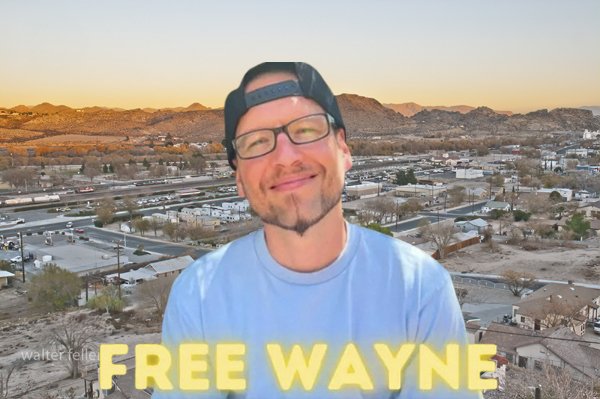
SUPPORTERS, ATTORNEY CALL ON COURT TO “FREE WAYNE!”

VICTORVILLE – Supporters of jailed community activist, basketball coach, and PhD candidate Wayne Martin Freeman will hold a press conference on the first day of the trial in which he is charged with stalking and threatening a public official, both felonies, and “electronic harassment,” a misdemeanor. The charges stem from an incident on December 26, 2024, in which Mr. Freeman, a dedicated advocate for victims and survivors of police violence, knocked on the door of San Bernardino County Sheriff’s Detective Starsun Fincel. Nobody answered the door.

In the video of the incident posted to Instagram, Freeman is heard asking aloud, “We still know nothing about what’s going on with Fincel,” and “What’s going on? You bodyslammed a sixteen-year-old girl and put her in the hospital!” Freeman is then seen walking back to his car. The question was in reference to a September 2023 incident in which sheriff’s deputies were called to the scene of a disturbance among teenagers at Victorville High School in which, rather than protecting the young people, Fincel was filmed attacking teenager Faith Jeffers.

On December 27, 2024, Freeman was served with a warrant for his arrest at his Moreno Valley home. Video shows several deputy sheriffs aiming their firearms at Mr. Freeman prior to making the arrest.

Since then, Freeman has been held in jail. Initially, bail was set at $150,000 and subsequently increased to  $180,000, only to be denied entirely at a bail hearing on January 13, 2025. Freeman had never received any stayaway order and has no violent criminal history.

Trial begins today and Freeman’s supporters are rallying in support of his freedom and his right to continue to do activism, which is under attack with these charges.


WHO: Wayne Freeman Defense Committee, police accountability activists, basketball players.
WHAT: Press conference to call attention to the injustice being perpetrated against Wayne Freeman by the San Bernardino County Sheriff’s Department and the District Attorney.

WHEN: 7:30 AM
March 24, 2025
WHERE: Victorville Superior Court
14455 Civic Dr
Victorville, CA 92392
VISUALS: Protesters with signs and banners, the courthouse.

Media contacts: Valeria Carlos (Wayne Freeman’s wife): 909-573-9480
Benjamin Wood (Wayne Freeman Defense Committee): 909-996-1624

###

The Wayne Freeman Defense Committee was formed in December 2024 to support Wayne Freeman and his family, create awareness of the case, and to raise money for legal defense.

Sign of the Times: Chino Valley School Board President Sonja Shaw Announces Bid for State Superintendent of Public Instruction

In July of 2023, the Pomonan reported that California State Superintendent of Public Instruction Tony Thurmond stood before the Chino Valley Unified School District Board telling them that he opposed their plan to require staff and teachers to provide parents and caregivers with changes in their students’ gender Identification. He told them that this mandate would violate student rights for their safety and privacy, that based on research, such a ruling would place them in harms’ way.

Even before Superintendent Thurmond was able to return his seat CVUSD’s Board President Sonja Shaw began haranguing him from the dais:

“Tony Thurmond, I appreciate you being here - tremendously - but here is the problem -we are here because of people like you. You are in Sacramento proposing things that (raises voice) PERVERT CHILDREN. You had a chance to come and talk to me, Tony. By all means - you had a chance to talk with me. Why was it so important for you to walk with my opponent? YOU are the very reason why we are in this.” 

At this point Superintendent Thurmond returned to the podium and said:

“May I have - as a Point of Order, as the Board President . . .” before CVUSD President Shaw interrupted him, shouting and talking fast:

“No, this is not your meeting, Tony Thurmond. You can have a seat. Because if I did that to you in Sacramento, you would not accept it. Please sit . . . You are not going to blackmail us. You have already sent us a blackmailing letter on previous . . . You will not bully us here in Chino! Please sit.”

Now, the very same CVUSD Board President Sonja Shaw has recently announced her plans to run for the position of California State Superintendent of Public Instruction. In the interim, the Chino Valley School Board President Shaw led CVUSD to become the first district in the state to pass a parental notification policy for transgender students. In response, state lawmakers passed a bill prohibiting such so-called “trans outing” policies.

Board President Shaw is associated with Calvary Chapel, a large church in Chino Hills that has taken an active role in recruiting and endorsing conservative candidates for local office. In the nearby community of Claremont, a Calvary Chapel recruited candidate, Mark Reynoso, recently lost his bid in November for Claremont USD’s Board by a slim margin.

Superintendent Thurmond has held his State Superintendent’s position since 2019 and is currently in his second term. He is running for governor in 2026, leaving the schools chief position wide open. 

Stay tuned . . .


Pamela Casey Nagler, Pomona-born, is an independent scholar, currently conducting research on California’s indigenous people, focusing on the Spanish, Russian, Mexican and US invasions between 1769 and the 1860s. The point of studying this history is to tell us how we got here from there. 

Alleged Active Shooter Reported at Mckenna College at Claremont College Campus

Photography by Julian Lucas ©2025

Updated 3/13/2025 9:40p | PST

At 5:15 p.m., Campus Safety issued a shelter-in-place order for students on campus, while those off campus were advised to stay away due to a potential active shooter on the campus of Mckenna College.

Helicopters circled above the Colleges as students in North Quad were directed to evacuate toward Harvey Mudd College by Campus Safety and law enforcement officers.

This situation is still unfolding, and updates will be provided as new details become available.

The Claremont Police Department and other supporting law enforcement agencies, has determined that there is no active threat on campus. The Shelter-in-Place order has been lifted.

Earlier, CPD dispatch received a report of an active shooter and responded, working in coordination with TCC Campus Safety and CMC Public Safety. After a thorough search of the campus, no evidence of a threat was found. Normal campus operations will now resume.


Julian Lucas, is a photographer, a purveyor of books, and writer, but mostly a photographer. Don’t ever ask him to take photos of weddings or quinceaneras, because he will charge you a ton of money.

Inland Empire Activists to Highlight Pete Aguilar and Norma Torres’ Support for Funding the Genocide in Gaza with Billboard Truck Protest

This Friday, October 25, a mobile billboard protest will take place in the Inland Empire to draw attention to Congress members Pete Aguilar and Norma Torres’ ongoing support for billions in taxpayer funding for Israel as it continues to bomb schools, hospitals, and refugee camps, leaving no safe areas in the small strip. 

The protest will kick off near Norma Torres's office, then make stops at prominent locations, including Ontario Mills, Rancho Cucamonga City Hall, Fontana City Hall, Downtown San Bernardino, and Redlands, culminating in front of Pete Aguilar’s office.

“It has been one year since Israel’s latest bombing campaign in Gaza. Entire communities have been wiped off the map. In the Inland Empire, many families struggle to secure affordable housing with some relying on schools to provide their children with meals. Yet, Pete Aguilar and Norma Torres continue to support the allocation of billions in taxpayer dollars to a country that has relentlessly bombed civilians, including children, for an entire year. This is a shameful stance,” said Sam Soloman, a spokesperson for the protest organizers. “We stand in solidarity with the Palestinian people in their fight for freedom, and we demand our representatives focus on improving conditions for our local communities.”

For more information, please contact
Sam at 909 521 1707

Community Activists to Protest Congresswoman Norma J. Torres' Support for Israel’s Genocide on Gaza

POMONA, CA - On Wednesday, July 24, 2024, community activists will gather to protest Congresswoman Norma J. Torres' recent support for Israeli military actions against Palestinians. This demonstration comes in response to her meeting with Israeli Prime Minister Netanyahu and advocating for continued U.S. arms shipments to Israel.

Congresswoman Torres, representing District 35, is complicit in the Genocide of the Palestinian people of Gaza & her constituents demand she call for an immediate ceasefire. Constituents will gather to voice strong opposition for actions tantamount to genocide against Palestinians. The protest will coincide with Prime Minister Netanyahu's scheduled speech in Washington, D.C., aiming to send a clear message of dissent against Torres' alignment with Israeli policies.

Protesters will gather at Dudley Street overpass over Interstate 10 and hold large banners denouncing Netanyahu and Torres. The banners will be visible to westbound morning traffic. Wednesday, July 24, 2024, from 6:00 AM to 10:00 AM PST .

Organizers encourage community members to join in solidarity to express their disapproval and demand accountability from their elected representative, Norma Torres. This event aims to highlight concerns over U.S. foreign policy and its implications for the rights of Palestinians. For more information or media inquiries, please contact Arianna, Priscila or Ben at ontariounitedforliberation@gmail.com


Ontario United for Liberation is a community organization from Ontario, California geared toward liberation, equality and justice.

Investigative Report: Did Current City Council Members Victor Preciado and Steve Lustro Properly Disclose the Campaign Contributions they received from Pomona Police Officers' Association in 2018?

During the 2018 election cycle, the Pomona Police Officers Association PAC (PPOA) made campaign contributions to three Pomona City Council candidates for around $9,000 each - Victor Preciado, Steve Lustro, Christina Carrizosa. Preciado and Lustro won their election that year and are currently sitting members of Pomona’s City Council today.

In recent days, it has come to the attention of the Pomonan editorial Board that these campaign contributions were not properly reported.

In the fall of 2018, the PPOA paid more than $41 thousand to the Freedman Public Affairs for mailers to support the campaign of Victor Preciado, Steve Lustro, who won their election, and Christina Carrizosa, who lost hers.

According to CalAccess, District 2 council member Victor Preciado received a total of $9,689.12, and District 5 council member Steve Lustro received $9.396.56 from the PPOA through contributions and late independent expenditures.

Before assuming office on Dec. 3, 2018, both officials filed a California Form 700, also known as Statement of Economic Interests form, but neither reported the amount received from the PPOA. The form is meant to prevent decisions made by public officials from being influenced by their personal financial interests.

Pomona Ordinance No. 4298 states any person holding a position in Government Code Section 87200 needs to file any required Statement of Economic Interests report online or electronically with the City Clerk.

The PPOA made 83 donations to Preciado’s campaign and 72 donations to Lustro’s campaign of different totals ranging from $72.54, $27.67, $26.86, $1,436.07 and $678.59 from Sept. 2018 through Nov. 2018.

On his 700 form, Preciado reported his salary working with the Kellogg Company and from the San Gabriel Valley Conservation Corps as in the range from $1,001 to $10,000, but did not report the amount donated to his campaign by the PPOA.

Lustro did not report any of the donations from the PPOA or any other salary that might influence his decision making. See both Form-700

Under the Pomona City Code, Article II, Sec. 10-34, it stated that a candidate shall not solicit or accept any contribution which will cause the total amount contributed by such person with respect to a single election in support of or opposition to a candidate that exceeds $500.00.

However, Section 10-36 of the same code states that all contributions, including campaign contributions, exceeding $25 needs to be reported.

During the same election, the PPOA also made 72 donations that equated to $9,449.49 to the campaign of Council member Christina Carrizosa of District. Carrizosa was currently on the Council at the time, but lost her position to current Pomona City Council member, Nora Garcia.

The Police Oversight Starts Today (POST), a coalition of Pomona and area residents, filed a complaint with the Fair Political Practices Commission in Aug. 2021 claiming the PPOA caused a conflict of interest when it donated sums of money to certain council members and not equally to every potential candidate.

Council member Preciado, recently contacted, said he wasn’t aware of the money. He also stated that, the form does not need to have that kind of payment on it: 

“While [the PPOA] have to state who they are using it for, they actually can’t legally coordinate or talk to the candidate about it. In this example I wasn’t aware of this expenditure or what they used it for.”

To date, Pomona city council member Lustro has not responded to this reporter’s request for comment.

Pomona Renews Contract with DPOA for Supplemental Police for the Business Improvement District

Pomona PD frisking an unhoused individual at Veterans Park ©2001 Julian Lucas
City of Pomona Circa 1950’s
Illustration Julian Lucas

The city of Pomona approved to renew its contract with the Downtown Pomona Owners Association (DPOA) for supplemental police patrolling for the downtown Pomona Business Improvement District (BID) during the June 3 council meeting.

According to the Los Angeles City Clerk, a BID is a “geographically defined area within the city in which services, activity and programs are paid for through a special assessment which is charged to all members within the district…”

The agreement will provide two police officers to continue patrolling the downtown Pomona BID on top of the private security the DPOA allocates money for. The DPOA will pay $187,288 of the police salary, while the city will pay $337,752, bringing up the total of the contract to $525,040.

The city’s budget for the new fiscal year was adjusted to accommodate for the renewal of the contract with the DPOA. A total of $10.9k was added to the budget.

Tim Sandoval, mayor of Pomona, emphasizes that the renewal wasn’t motivated by anyone on the council, but rather, the city is answering what businesses within the downtown Pomona BID have been calling for. 
“It was really driven by the business owners themselves who have experienced a number of different break-ins, burglaries, broken windows,” Sandoval said. “It's been a challenge for some of them.”

The DPOA revenue consists of a tax that every business within the district pays to help promote the area, keep it clean and provide private security.

The city of Pomona created the Downtown Pomona Unit (DPU) with the DPOA back on June 22, 2022 to help the private security it hired patrol and secure the district. Between the years of 2021-2022, the DPOA spent $306,373 on security for the BID. The city recommended it allocate 49.8% of the city’s budget for the Pomona Police Department for the new fiscal year.

A volunteer of the non-profit bookstore located within the BID, Cafe Con Libros, Ralph Acosta, has seen multiple incidents where help was needed to ease the tension. Acosta describes a moment where he saw unhoused people harassing children from the local school as they were crossing the train track. However, he doesn’t think the continuing policing of the downtown area will solve the problems it faces. “I’m in pro-support of [the] community in different layers,” Acosta said. “But to me, it surpasses more than just the layer of policing. Policing itself is one layer and I don’t see that solving the problem.

Mike Ellis, the chief of police, mentioned the new money isn’t paying for training on how to deal with people going through a crisis. “We just recently trained everyone on de-escalating techniques which can include someone that’s being violent or potentially in a mental health crisis,” Ellis said. “So we have ongoing programs for these types of training that the officers [from] downtown will also participate in.”

The contract renewal comes with the option of extending it past the 2024 fiscal year and into the year 2025. 


EDITORS NOTES
Over the past thirty years, business improvement districts, (BIDs), have been incredibly popular across the nation. On the other hand, not much is actually understood about how they affect communities. Anecdotal and scientific data supporting strongly held beliefs about BIDs is scant. Some claim that BIDs are a creative means for businesses and communities to unite in response to decline in public funding or known as disinvestment which caused abandonment. Some also claim they provide “safety, cleanliness and habitable for residents, and vendors”. While others attest that BIDs are a sham that uproot underprivileged people, criminalize the unwanted, and alter local culture.

”BIDs are geographically bounded areas where local property owners can assess themselves or their tenants a fee to solve problems that are negatively impacting the local business environment.”

BIDS redesign large areas of public realm in our cities [and] become a powerful voice shaping land use, zoning, transportation, and urban redevelopment planning. BIDS are incorporated as non profit organizations, which people may think being a non profit is doing good work for the board. However, we have to ask who sits on the boards of these organizations?
Schaller, Sussana, Business Improvement Districts and The Contradictions of Placemaking; Georgia Press

The majority of BIDs board members are property owners. Moreover, BIDs are a taxing body that assesses properties within the BIDs boundaries. Originally used in assessing commercial properties, residential properties are being assessed more frequently in the present day. Despite the policy language's emphasis on supporting small companies and maintaining a clean and safe environment, the properties are ultimately the subject of the assessment. The assessments are then transferred to small businesses through their leases, which presents a contradiction. Small businesses are currently covering the cost of their lease and the assessment, which raises the value of the property.

On the weekend of March 26, 2024 there were multiple businesses in the downtown arts colony area that were vandalized resulting in store windows being shattered causing thousands of dollars in repair. The BID didn’t prevent this unfortunate crime from happening. In fact vandalism has happened on multiple occasions in the downtown area. So we have to ask the question, do BIDs really provide safety, is the area really secure with having two police officers present? Are the two officers only present during art walks? Why do we need police for art events?


The Pomonan is the cultural structure, empowering visionaries to propel the global society to the future.

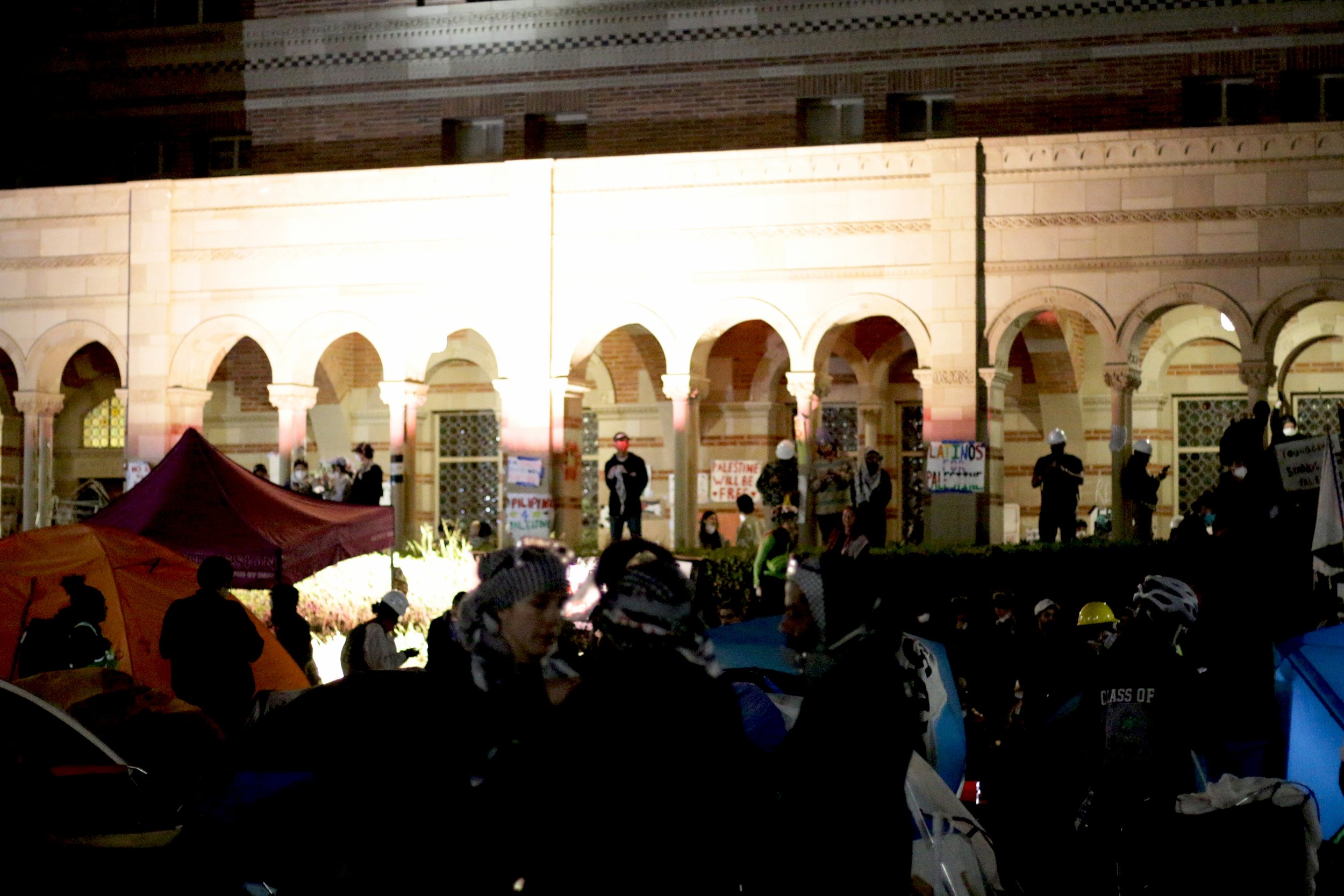
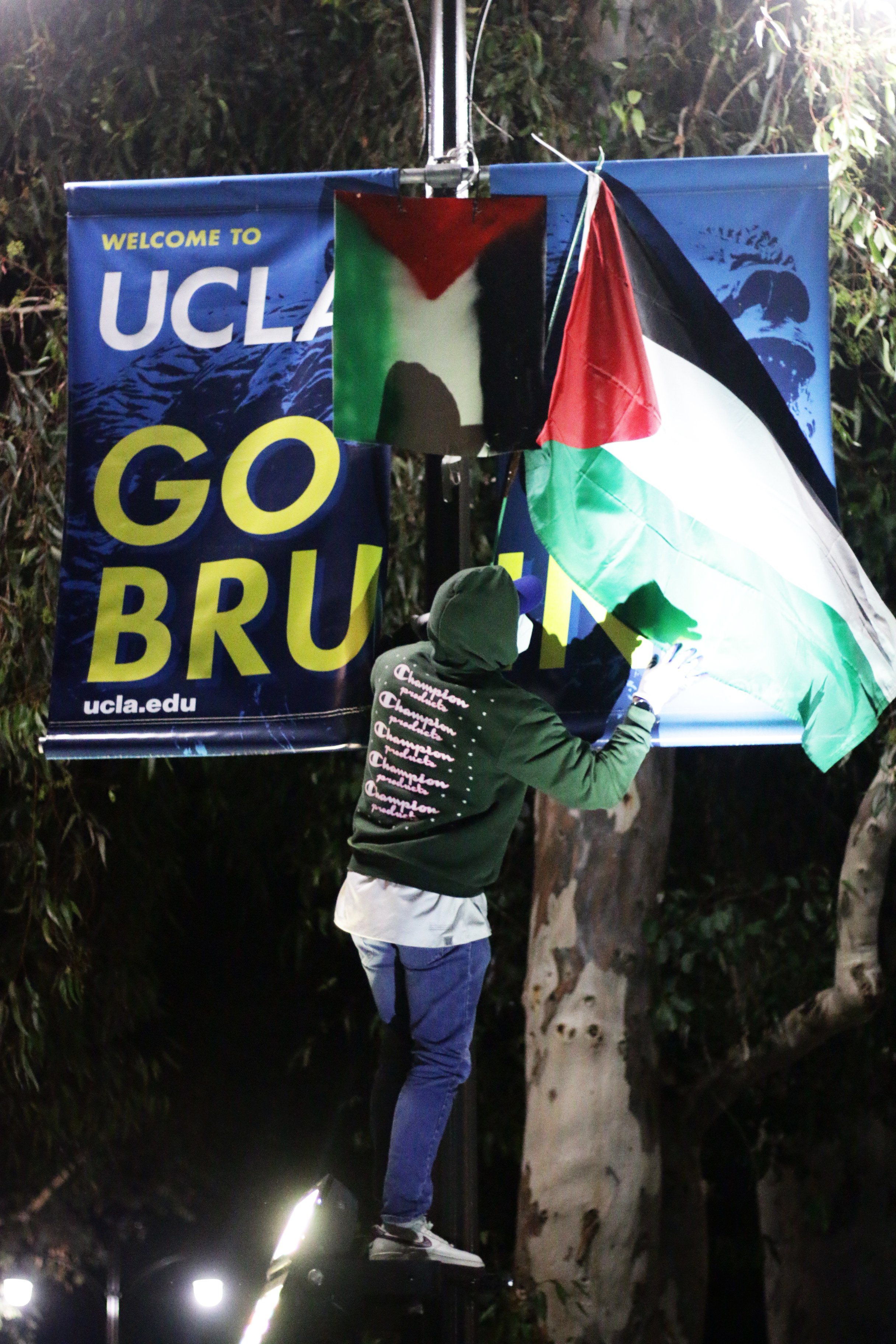
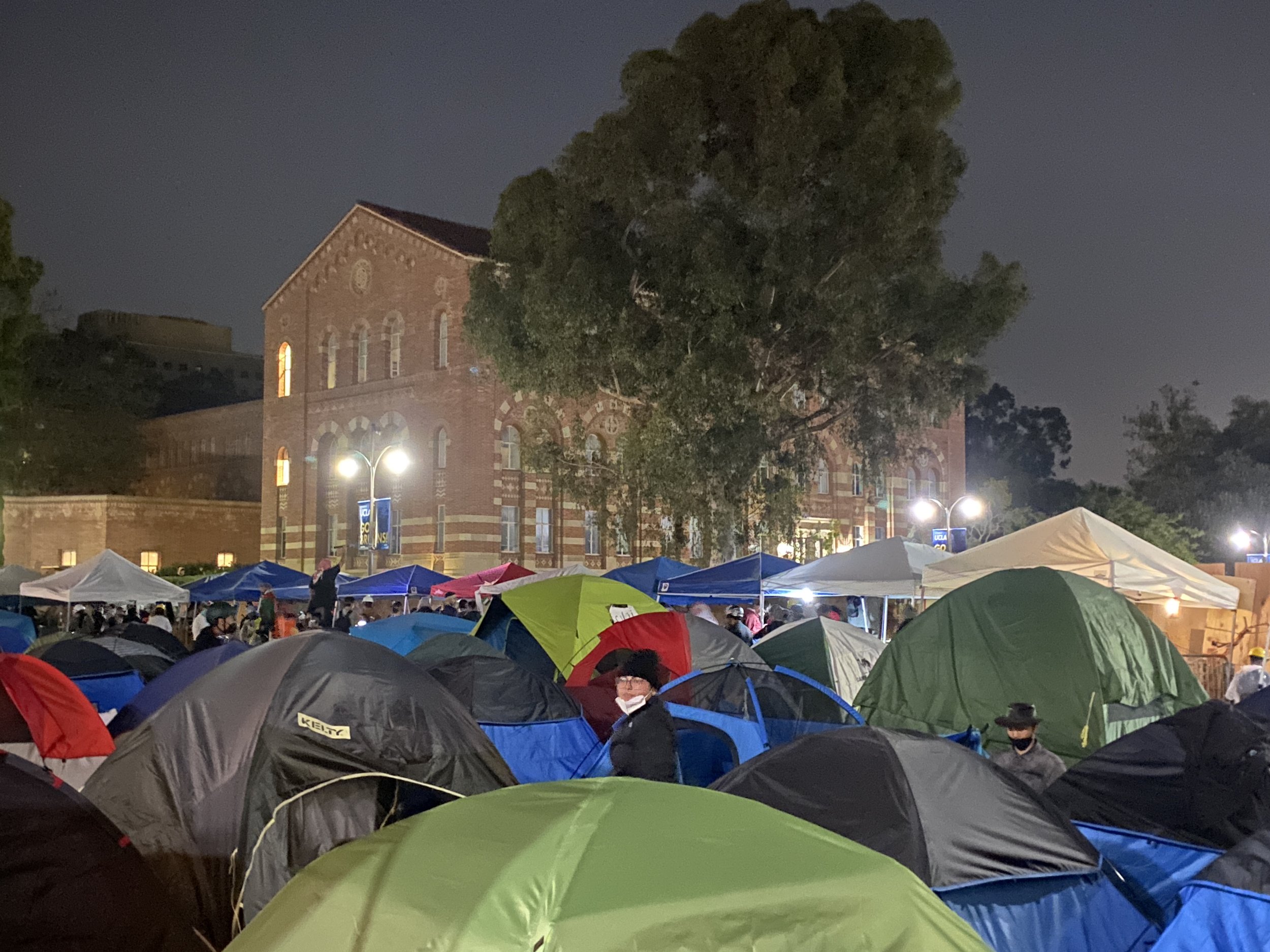
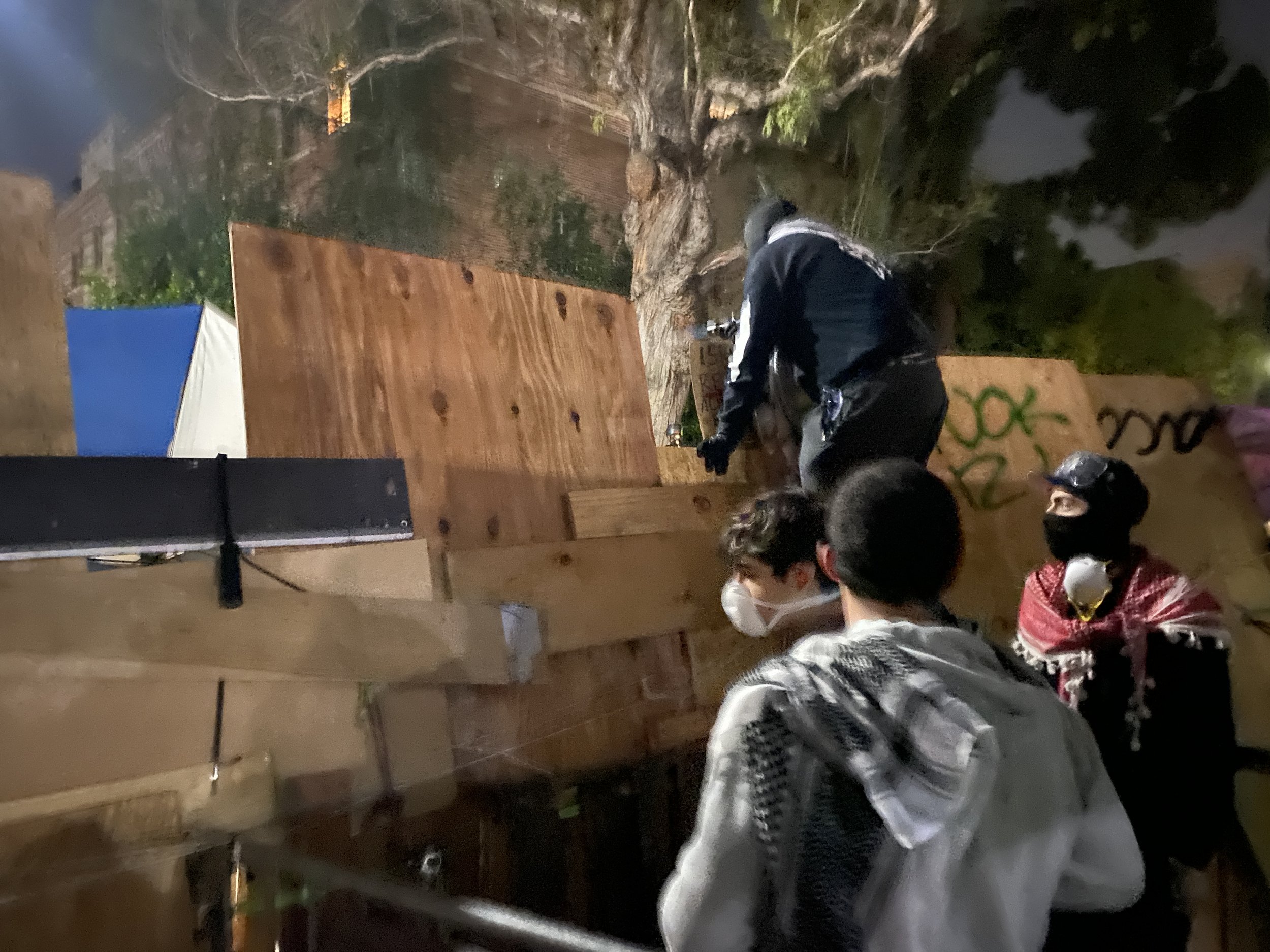
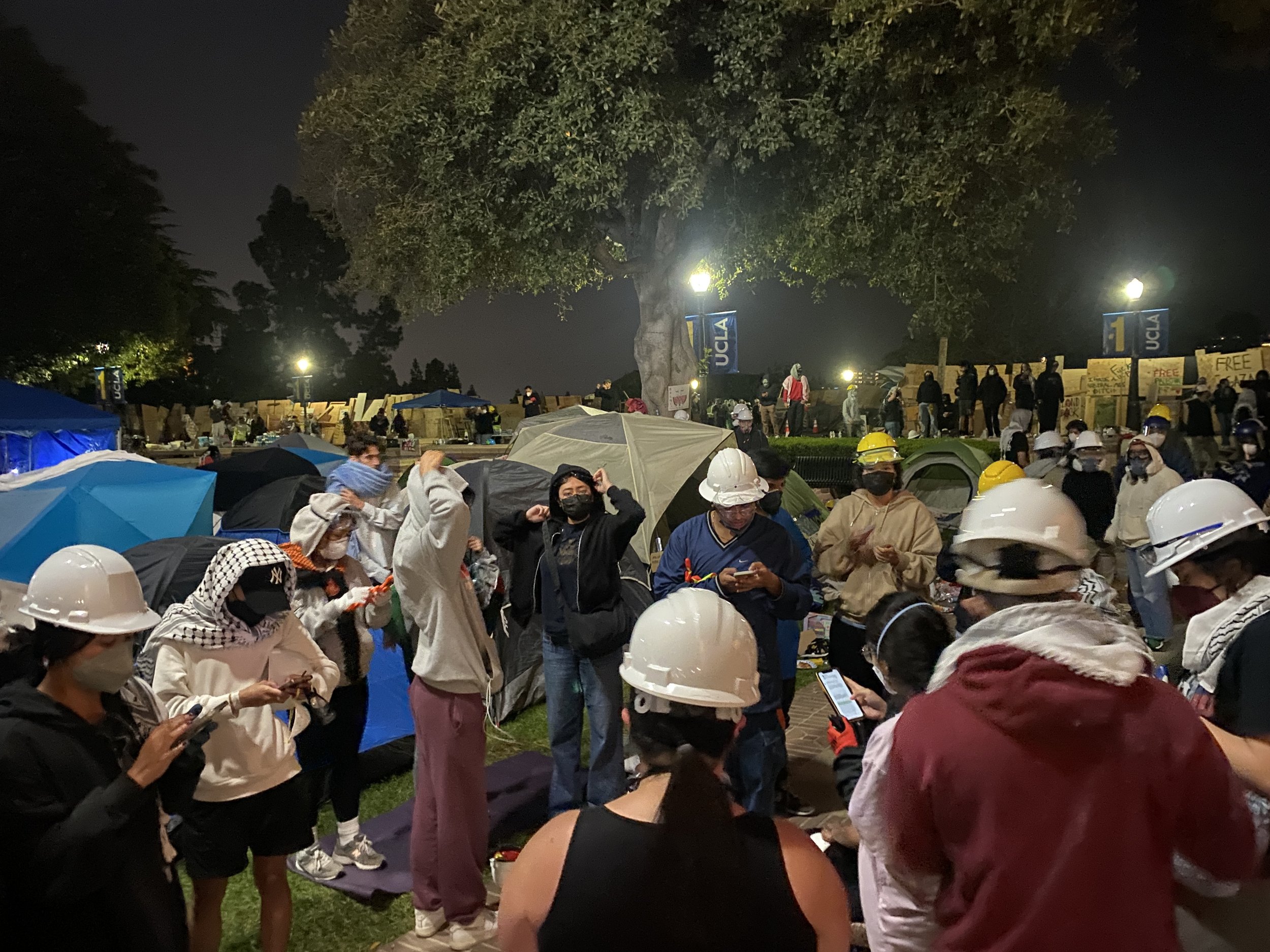
UCLA Protest: A Photographic Look at Student Activism on College Campus

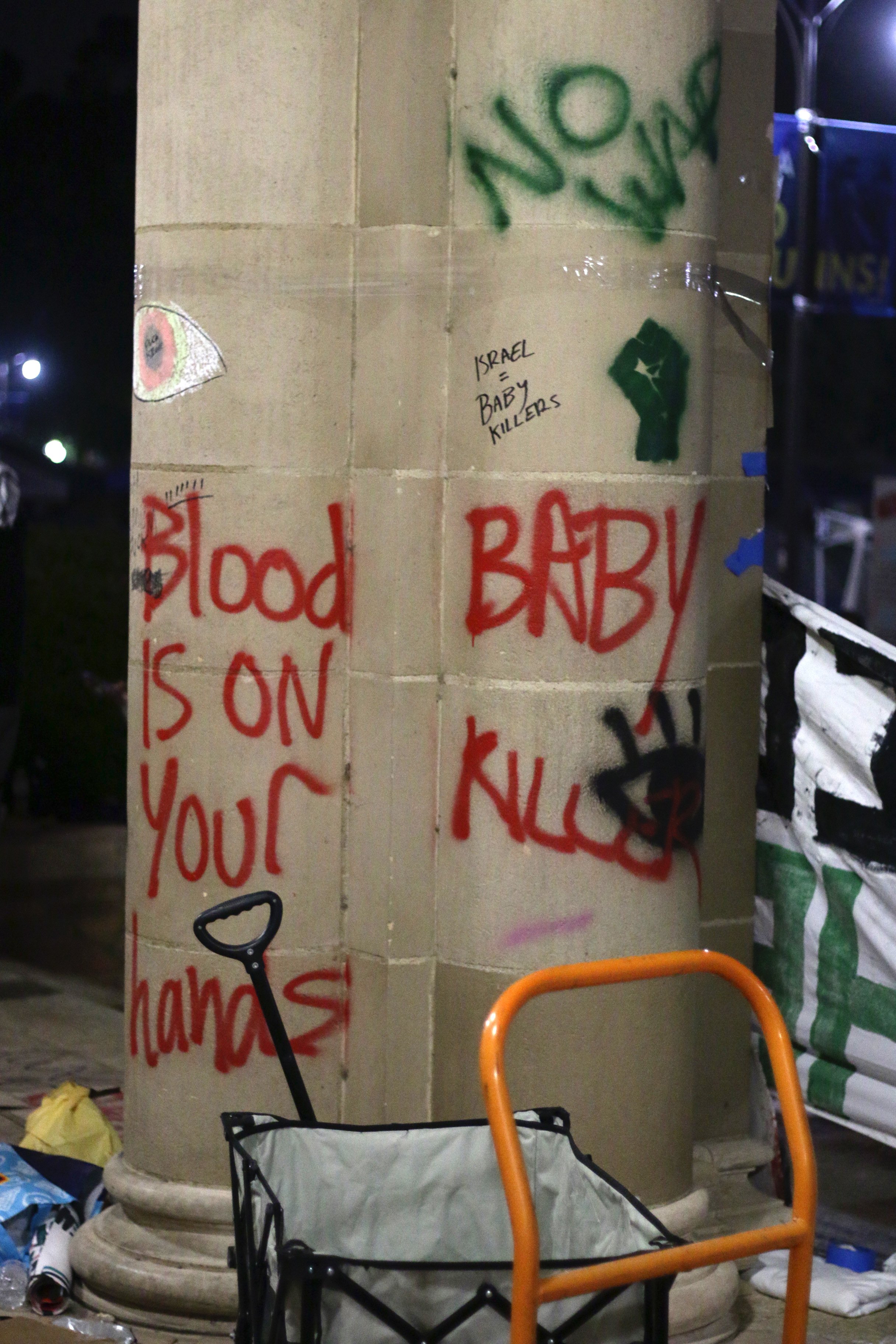
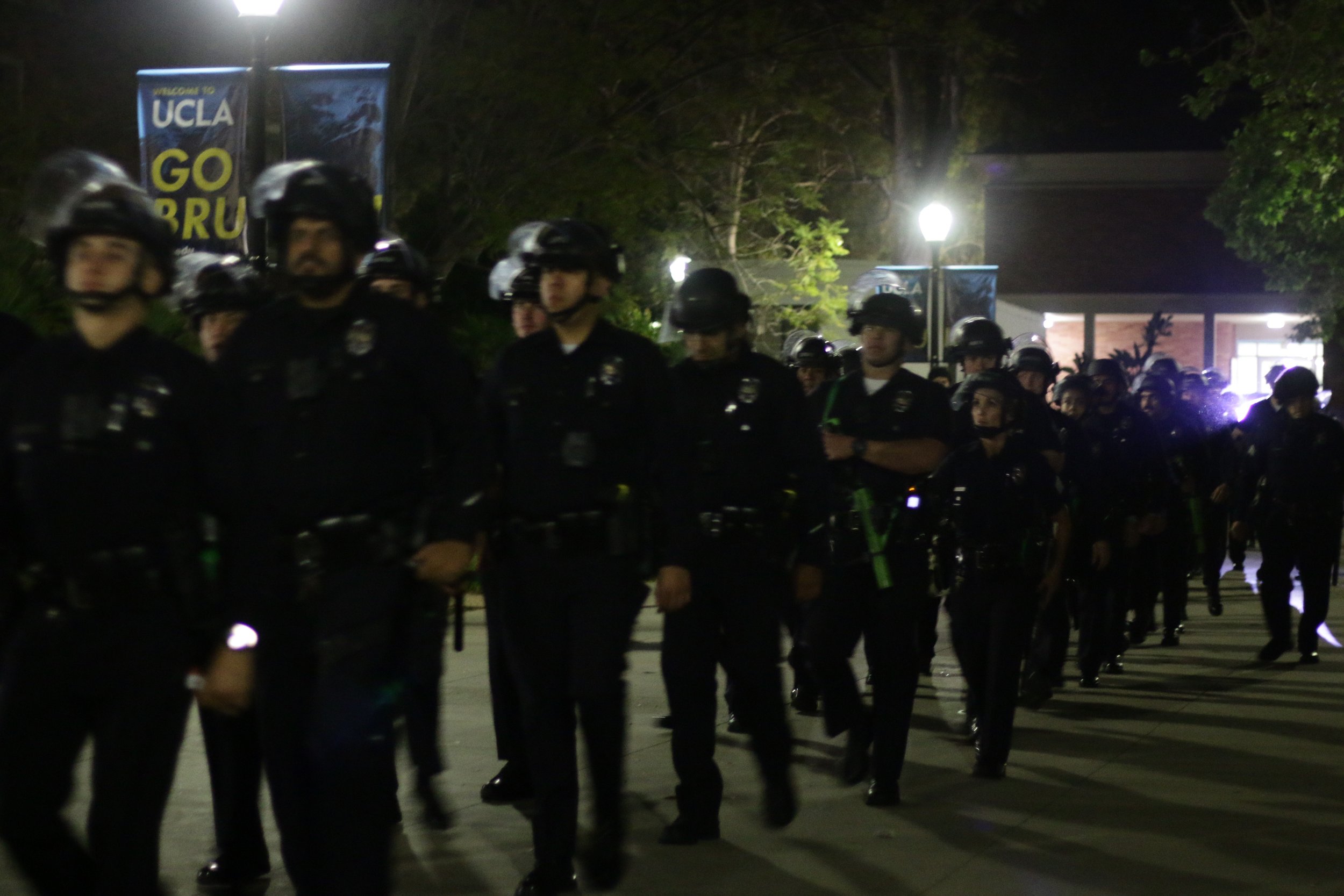
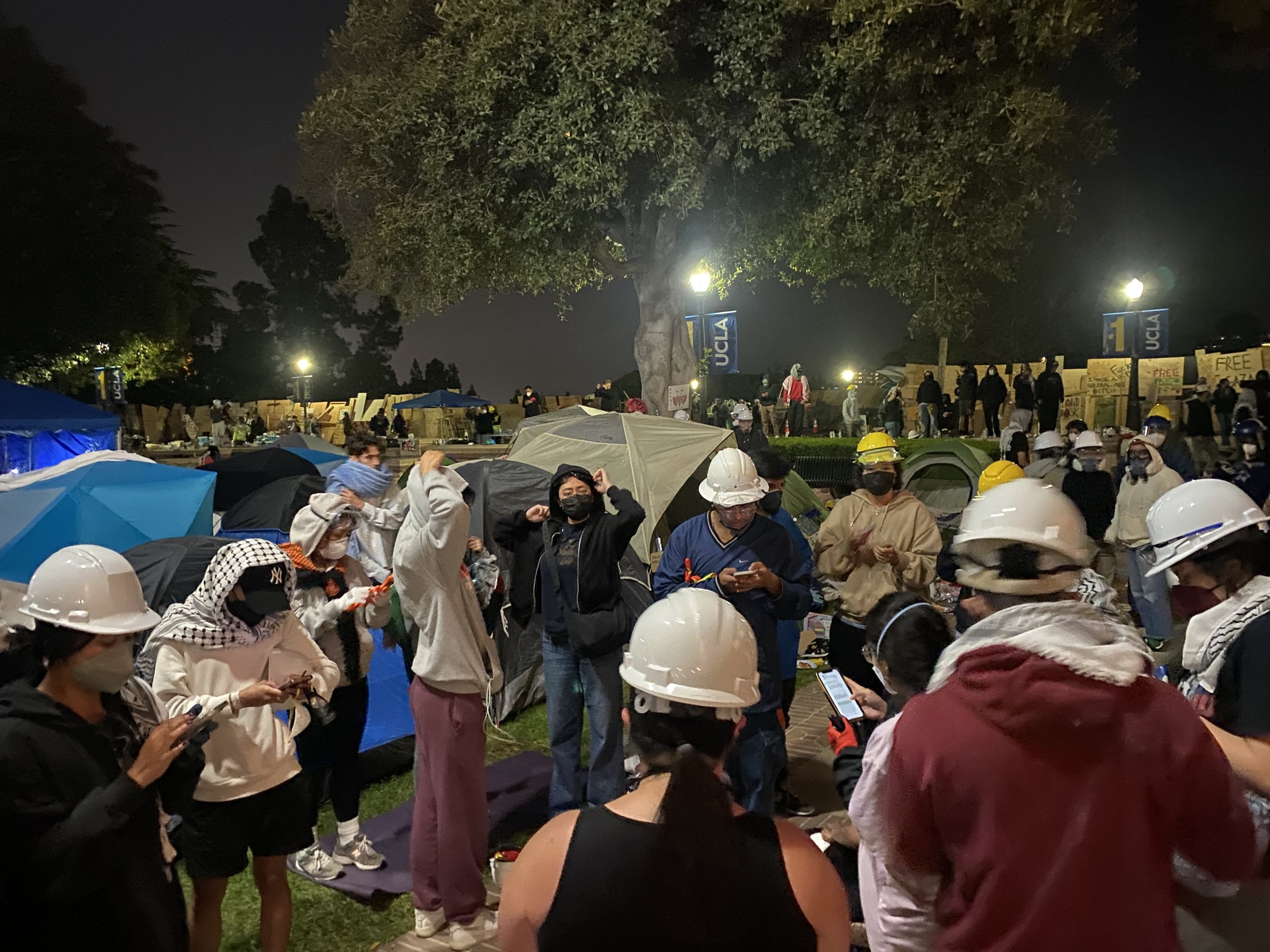
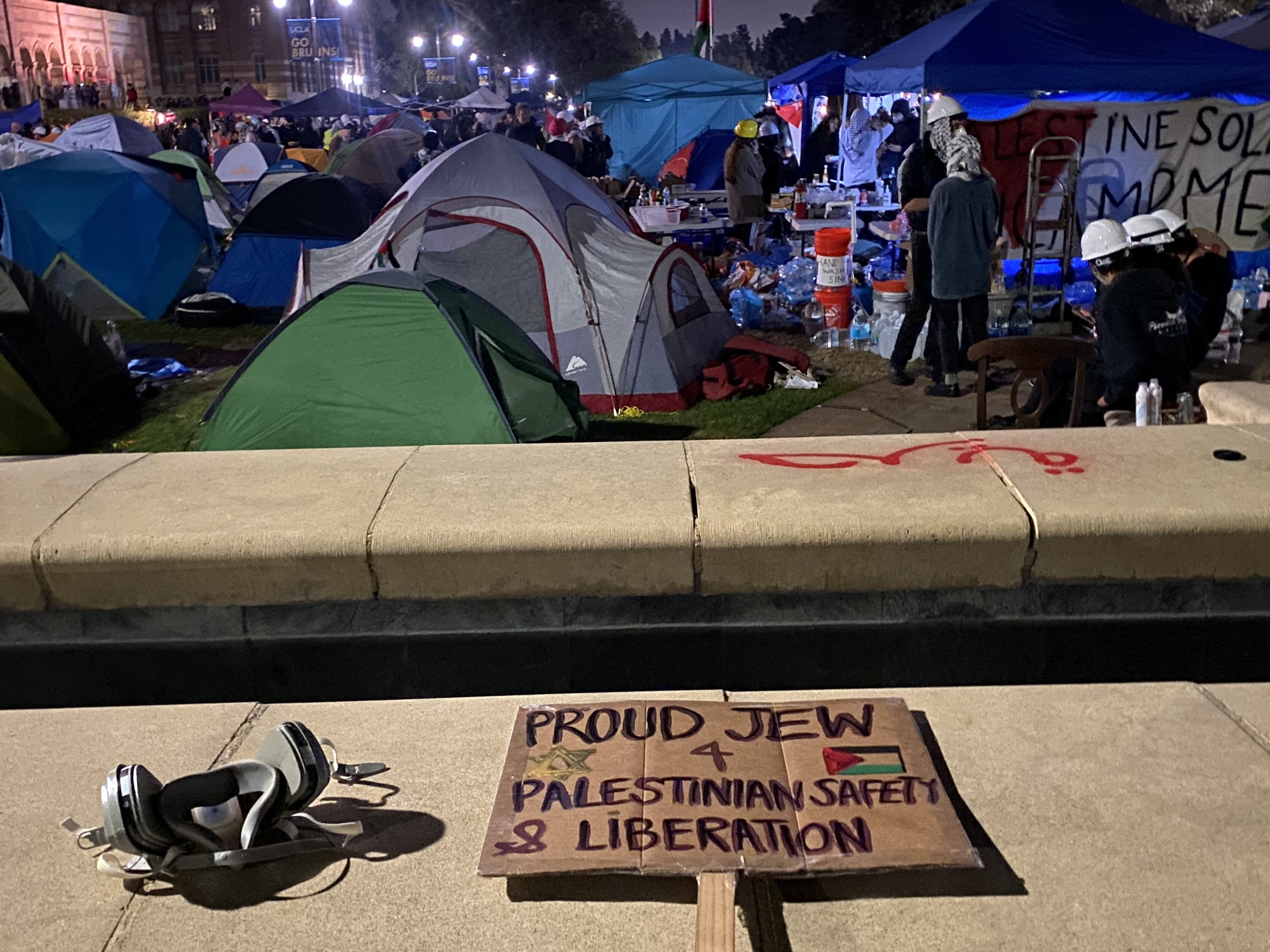
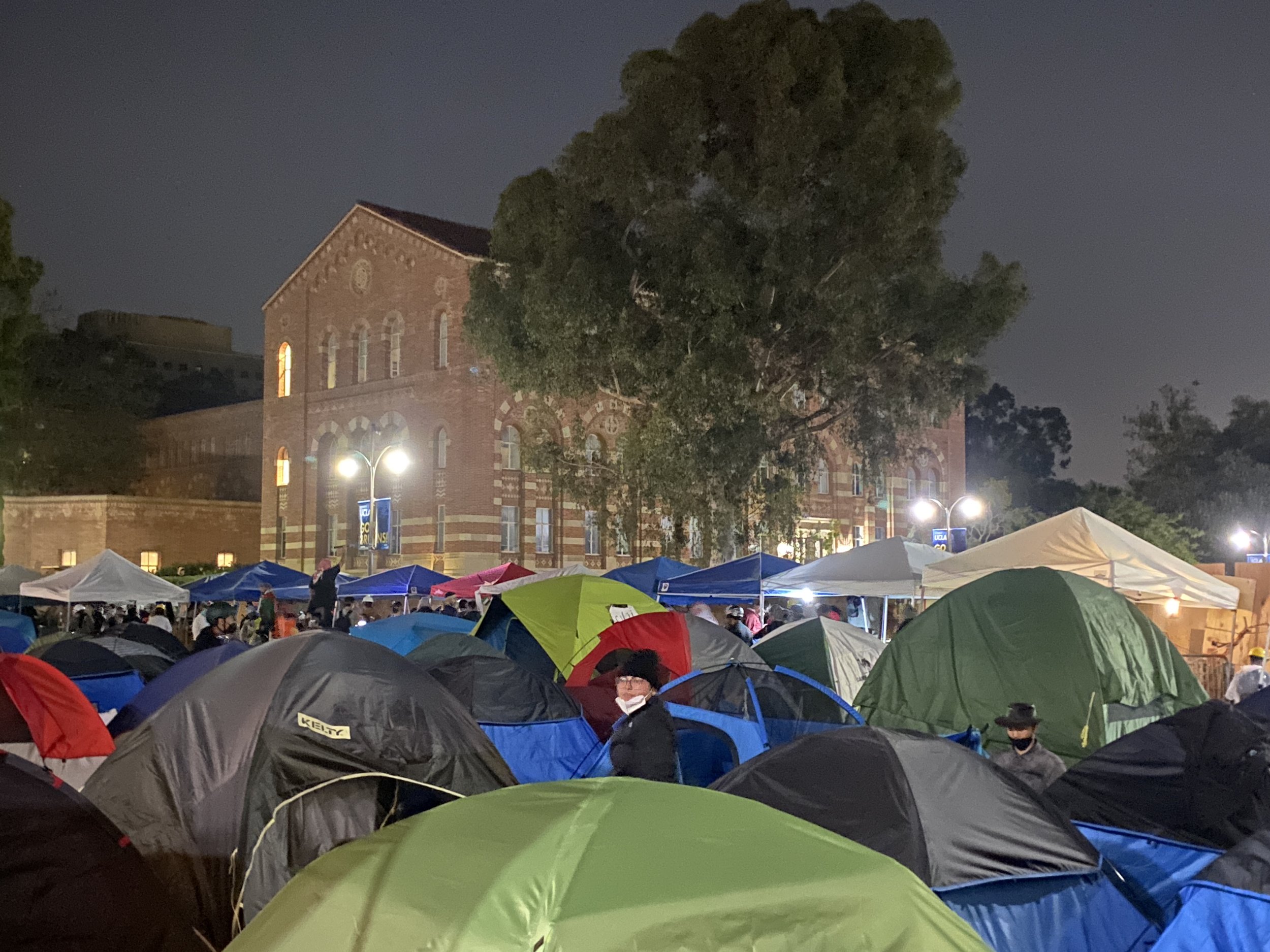
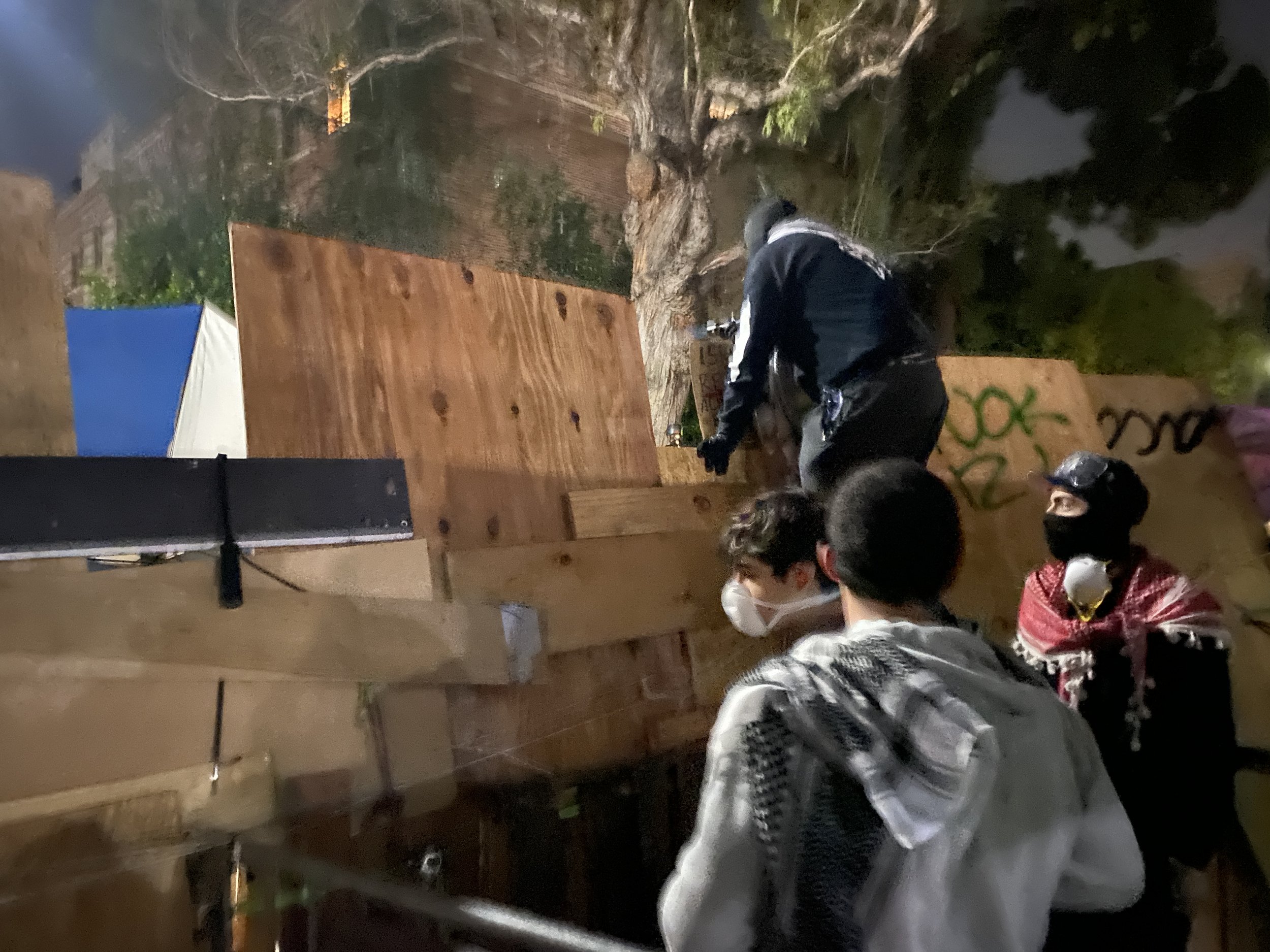
In recent weeks, the University of California, Los Angeles (UCLA) has become a focal point for student activism, with protests igniting conversations both on and off-campus. The demonstration, characterized by its passionate participants, has shed light on the evolving landscape of student activism in higher education institutions.

Wednesday night students continued protests, before police moved in early Thursday morning to disrupt the encampment by tearing down the makeshift barricades, and breaking apart tents to drive demonstrators out of the pro-Palestinian camp. More than 200 people were taken into custody on Thursday morning.


Julian Lucas, is a photographer, a purveyor of books, and writer, but mostly a photographer. Don’t ever ask him to take photos of your event because he will charge you 100,000,000,000. Julian is also the owner and founder of Mirrored Society Book Shop, publisher of The Pomonan, founder of Book-Store, and founder and project director of Print Pomona Art Book Fair.

Pomona College Faculty Responds to the Arrests of Claremont College Students

“The faculty condemns the present and future militarization and use of police on the campus. It insists that the College immediately drop criminal charges and reverse the suspensions and all related consequences against student protesters for their actions of civil disobedience."

Pitzer College’s Faculty Condemns Pomona College’s Suspensions of the Student Protesters

On the afternoon of Friday, April 5, Claremont College students staged a peaceful protest calling for Pomona College to divest its support of Israel and the corporations that send weapons to Israel. As part of the protest, some 20 students occupied the Pomona College President’s Office. When told to leave, they didn’t, and within approximately 20 minutes, the Police, including Claremont Police and police from 3 neighboring cities, arrested 20 students, 19 for occupying the building and one for blocking the entrance. Police zip-tied their hands behind their backs and took them to the jail at the Claremont Police Department on Bonita Avenue in Claremont.

That same day according to the Claremont College newspaper, This Student Life, Pomona College's President Gabrielle G. Starr issued this email:

“I will issue interim suspensions to any Pomona students who may have been arrested today; indeed I directly informed the individuals in my office that this would be the case.”

Pomona College's faculty will be convening on Thursday, April 11, to vote on a resolution condemning the suspensions.

However, on Monday, April 8, Pitzer College’s Executive Committee of the Faculty (FEC) issued their own statement of condemnation, "The FEC. . . strongly condemns Pomona College’s escalatory police response to a peaceful protest that took place on April 5, 2024. We further condemn the decision to suspend and/or bar from Pomona’s campus the students arrested in connection to that protest. Denial of the free exchange of ideas and access to education is antithetical to our mission as an educational institution, and deeply harmful to our community.

We also acknowledge that such a police presence/response created a serious and wholly unnecessary risk and significant distrust for many Pitzer and 5C community members, particularly those of marginalized identities, and those who disproportionately bear the brunt of police brutality. No community members should feel unsafe or be threatened when engaging in peaceful protest.

We offer support to affected students and call on our community to make that support tangible, including, but not limited to: providing space on Pitzer’s campus, where possible, for Pomona’s classes to meet, extending support for students to be able to attend classes and complete their academic work, and offering flexibility and compassion to affected students in terms of deadlines and attendance.”


Julian Lucas, is a photographer, a purveyor of books, and writer, but mostly a photographer, but don’t ever ask him to take photos of events because he will charge you a lot of money. Julian is also the owner and founder of Mirrored Society Book Shop, publisher of The Pomonan, founder of Book-Store, and founder of PPABF.

20 Pomona College Students Demonstrators Arrested and Face Suspension

Photography Julian Lucas ©2024

Updated April 9, 2024 | 3:44pm PT

Claremont, CA —  On Friday afternoon, Claremont Police took 20 student protesters from the Claremont Colleges into custody for occupying Pomona College President Gabrielle Starr's Alexander Hall office on Pomona College’s campus. Reportedly, 18 were charged with misdemeanor trespassing for not leaving the premises even though they had been “given directives” to leave, according to Claremont Police officer Eric Orozco. Police arrested an additional protester for failing to clear the path as police began to enter the Hall. 

Those arrested were part of 100 or so protesters who showed up on Pomona College’s campus to protest Pomona College’s refusal to divest itself from entities connected to Israel’s role in the war in Gaza.

After the arrest of the students, the protesters moved to Claremont’s Police Department offices where they waited in protest until the arrested students were released one by one.  Helicopters from several news sources showed up to document the proceedings.  

Earlier, police agencies from Claremont, Pomona, Azusa, Covina and La Verne had stood in full riot gear in riot formation in the middle of College Ave.

And, in an even earlier action, college administration forcefully removed student artwork, eight days after students at the Claremont Colleges erected a mock apartheid wall on Marston Quad. According to a press release from the student-led advocacy organization, Pomona Divest Apartheid, the students erected the work in order to “'illuminate Pomona College's complicity in the face of an illegal occupation and genocide.”

After questioning a Pomona Police Officer why they were in the city of Claremont, we also asked, doesn’t your presence in Claremont result in a  “shortage of officers in Pomona, in a city with security issues of its own.? The officer's responded, ‘take that up with your city officials.’


Julian Lucas, is a photographer, a purveyor of books, and writer, but mostly a photographer. Don’t ever ask him to take photos of events because he will charge you a lot of money. Julian is also the owner and founder of Mirrored Society Book Shop, publisher of The Pomonan, founder of Book-Store, and founder of PPABF.